
Normandy or the Somme: where should you begin a battlefield tour?
Added: 30th October 2026
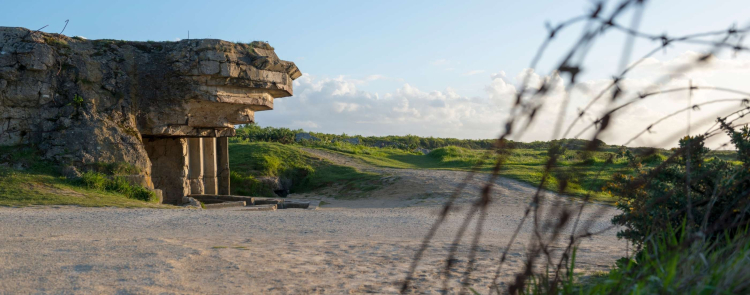
Surviving defences on the Normandy battlefield.
Choose Normandy if you want to understand D-Day and the opening of the 1944 campaign in north-west Europe. Choose the Somme if your interest lies in the First World War, the fighting of 1916 and the ways its dead are commemorated. Both reward a carefully planned visit, but they answer different historical questions.
Before choosing, think about what has prompted your interest. A family connection, a book, a particular regiment or a question about how a battle unfolded can be a better starting point than a list of famous places.
Normandy: following the events of D-Day
On 6 June 1944, Allied forces launched the invasion of Normandy. The operation brought together forces arriving by sea and air, and it began a campaign that continued well beyond the landing beaches. Imperial War Museums places that day within the longer struggle to liberate Europe from Nazi occupation.
For a visitor, the geography is part of the explanation. A beach, a bridge or a defended position becomes more meaningful when you understand the task given to the troops involved. Ask where they were trying to go, what they could see and what stood between them and their objective.
Commemoration also shapes the visit. Normandy American Cemetery overlooks Omaha Beach, linking a place of remembrance to the landing area below. Give such places their own time, rather than treating them simply as a pause between battlefield stops.
The Somme: reading a First World War landscape
On the Somme, the landscape invites you to consider the relationship between positions, fields of fire, villages and objectives. An apparently modest rise can be difficult to understand from a photograph or a map alone. Looking across it with the battle's sequence explained can change your understanding of an account you have already read.
The Thiepval Memorial is an important place to consider the war's human consequences. The Commonwealth War Graves Commission describes it as its largest memorial to the missing. Designed by Edwin Lutyens, it commemorates men whose remains were not identified or whose graves were not known.
A visit can bring together the military history and the history of remembrance. Why was a particular position important? How is an individual recorded? What can a cemetery or memorial tell us, and what further research would be needed?
Let your interests decide
If your reading centres on airborne operations, amphibious landings or the Allied campaign of 1944, Normandy offers a clear focus. If you are drawn to First World War service, regimental histories or remembrance, the Somme may be the stronger starting point.
For a family connection, gather the person's full name, service number if known, unit and relevant dates before choosing an itinerary. Do not assume a tour will visit a particular grave or battlefield. Ask the organiser whether your area of interest fits the published route.
Choose depth rather than a rushed combination
A short visit becomes more useful when its stops form a coherent story. Compare the focus of itineraries, the time available for interpretation and their activity requirements. The number of place names alone says little about how much you will understand at the end.
TCE's D-Day: Operation Overlord tour explores selected actions around the Normandy landings. For a broader First World War journey including the Somme, Journey's End: Verdun to Ypres places several battle areas within a wider narrative. Check the current routes and departures, and choose the journey that best matches the questions you want to ask.
Further reading:Imperial War Museums: D-Day historical overview; CWGC: Thiepval Memorial; ABMC: Normandy American Cemetery.