
The Etruscans
Tour Introduction
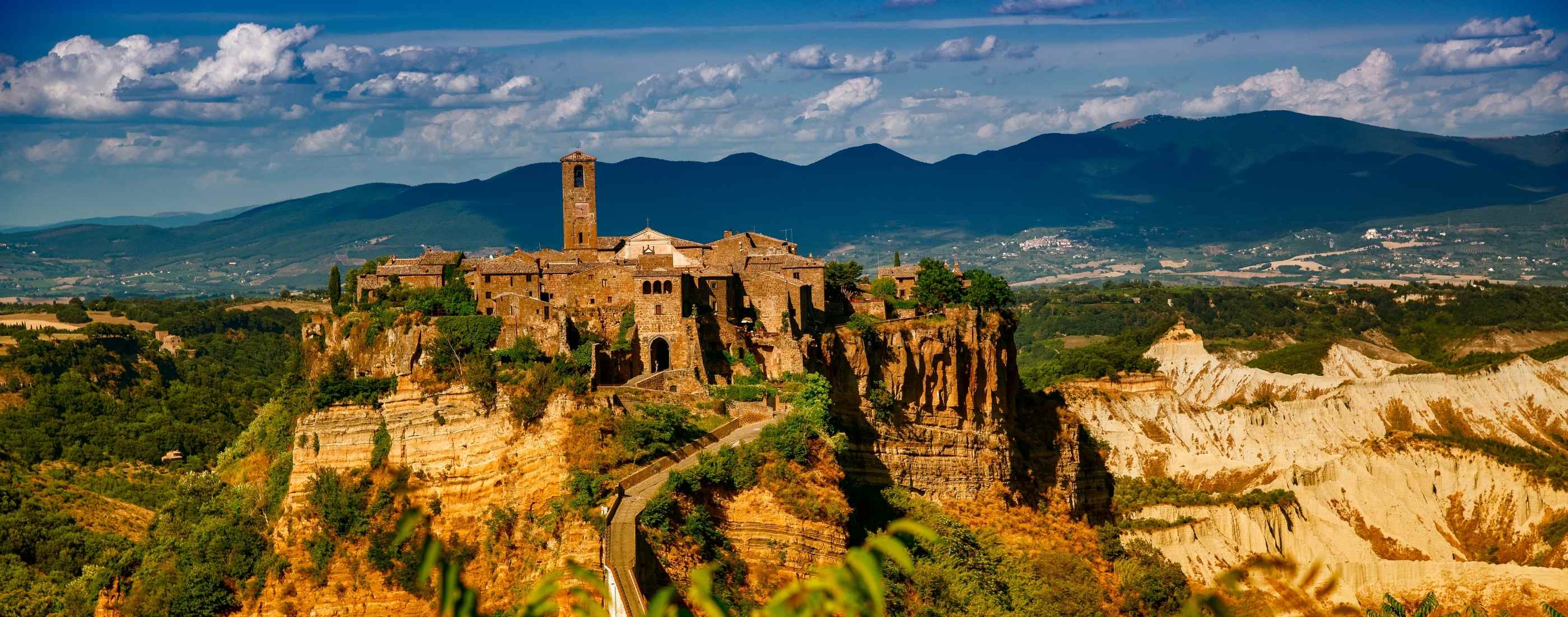
This 7-night and 8-day tour is an exploration of the fascinating Etruscan people, often overshadowed by their Roman conquerors, but sophisticated artists, craftsmen, traders, builders and military leaders in their own right.
In their heartland of Etruria this Italic culture has left a trove of dazzling artefacts which are still being discovered in the captivating hill towns of central Italy. On this tour we marvel over the engaging legacy of the Etruscans including planned towns, built centuries before Roman civic planning; impressive necropolises with frescoed tombs, decorated sarcophagi, glittering jewellery, and bronze sculptured offerings; remarkable underground chambers reflecting the sheer ingenuity of Etruscan engineering; and the exquisite Tomb of the Infernal Chariot, one of the most significant discoveries in Etruscan art.
Complemented by some of the best museums in Italy – including the superlative National Etruscan Museum – this is a tour that will inspire and stimulate your interest in what came before Rome.
Highlights
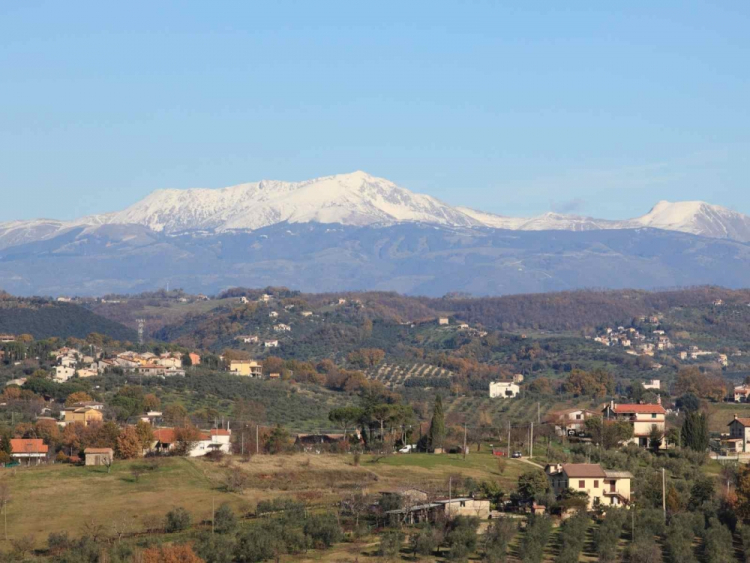
• Travel through some of Italy’s most magnificent landscapes and stunning hill towns
• Visit the Tomb of the Infernal Chariot, one of the most significant discoveries in Etruscan art
• Wander the streets of the ancient Etruscan towns of Civita Castellana, Cerveteri and Tarquinia
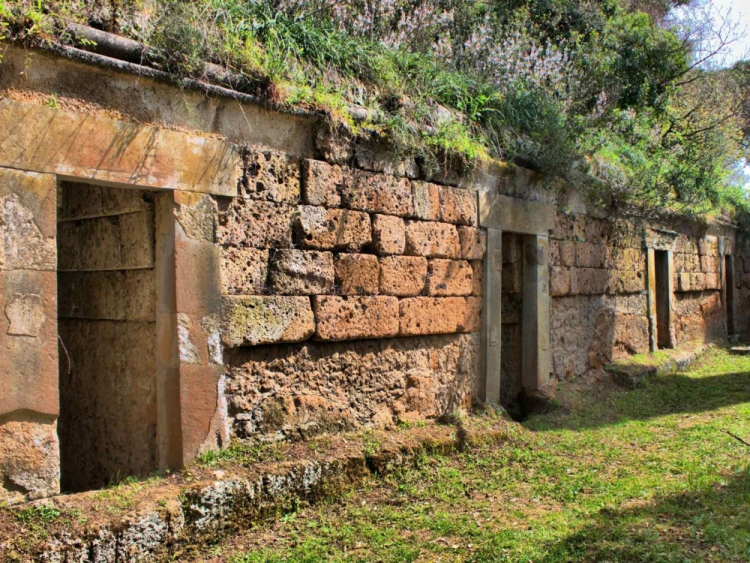
• Explore Etruscan necropolises and gain a close understanding of their way of death, and life
• Marvel at skilled Etruscan engineering at the underground city of Orvieto
• Enjoy the splendid Etruscan collections in the region’s museums including the superb National Etruscan Museum in Rome
Interested in this tour but not ready to book? Register your interest using the link below and we will keep you updated on the progress of the tour.

Oliver Gilkes
Oliver Gilkes is an archaeologist and researcher who has specialised in the Mediterranean. He worked as a museum curator and field archaeologist in the UK and taught at the University of East Anglia. Oliver has led archaeological projects in Italy, where he worked for the British School at Rome, and Albania at the Unesco World Heritage Site of Butrint and the Ottoman ‘stone city’ of Gjirokastra.
In Italy Oliver has worked on sites as diverse as the grounds of the British embassy, the pre-Roman city of Silvium in Puglia and in mountainous Molise the great Carolingian abbey of San Vincenzo al Volturno. In 1994 he and his colleagues crossed the Adriatic to post-communist Albania to begin a research and development project centred on the stunning site of Butrint on the Ionian Sea. There he organised the training programme, initiating hundreds of enthusiastic Albanian students into modern archaeology techniques.
Oliver continues to be involved in several research programmes in the Balkans and United Kingdom. He also has a busy programme of writing for popular scientific publications, plus finding time to squeeze in leading trips to some of Europe’s great archaeological sites.
Background
The Etruscans were one of ancient Italy’s most influential civilizations, fashioning early Roman culture and dominating central Italy. An endless thorn in the side of the young expanding Roman Republic, the Etruscans were portrayed by Rome’s historians as cruel, corrupt and avaricious. Their wars litter the pages of the early chronicles with Rome ultimately emerging victorious and absorbing their northern neighbours, leaving hardly a trace of their culture and long story. However, Rome was more influenced by these enigmatic neighbours than she would admit, adopting Etruscan religious rituals, architectural forms such as the arch, and even political institutions.
The Etruscans, known to themselves as Rasenna, developed in the region of Etruria -modern Tuscany, western Umbria, and northern Lazio—beginning around 900 BC with the Iron Age Villanovan culture. By the 8th–6th centuries BC, they had become a sophisticated network of independent city‑states, enriched by abundant mineral resources and thriving Mediterranean trade. Their cities, including Tarquinia and Cerveteri, grew into powerful urban centres that helped make the Etruscans the first major superpower of the western Mediterranean alongside the Greeks.
Although their own written histories have not survived, archaeological evidence -especially elaborate tombs and colourful wall paintings - reveals a culture deeply engaged with art, religion and the afterlife. Their artistic skills blended local traditions with Greek, Phoenician and Egyptian influences.
By the late 4th century BC Etruscan power waned as Rome expanded and by 27 BC their territory was fully absorbed into the Roman Empire. Centuries later the rediscovery of the Etruscans would prompt a frenzy of ‘etrustcomania’ amongst the aristocracy of Papal Rome and Europe reflected in palaces, parks and museums.
Day 1: Arrival
Day 1: Arrival
Fly from London to Rome Fiumicino airport where the group assembles. Transfer to our hotel near Sutri for 4 nights. (D)
Day 2: National Etruscan Museum and ‘the door of Etruria’
Day 2: National Etruscan Museum and ‘the door of Etruria’
Our tour begins at the excellent National Etruscan Museum in Rome, a perfect starting point for the tour. Highlights here are the exquisite Sarcophagus of the Spouses and the Pyrgi Tablets which made a vital contribution to our understanding of the Etruscan language.
We return to Sutri, ‘the door of Etruria’, an important Etruscan city which controlled vital road links to the civilisation’s heartland. We visit the amphitheatre, expertly carved out of the rock by Etruscan architects, and the remarkable necropolis of 64 tombs carved into tuff cliffs whose importance survived into the Roman and medieval eras.
Nearby, the Mithraeum began as a sanctuary for the cult of Mithras before being transformed into a Christian chapel. (B, D)
Day 3: Tarquinia – Etruscan life and death
Day 3: Tarquinia – Etruscan life and death
We travel to Tarquinia, one of the most ancient and significant of Etruscan towns, and now a UNESCO World Heritage site. The wonderful richness and colour of the Etruscan way of life and death is clear from the nearby Monterozzi Necropolis where hundreds of vividly frescoed Etruscan tombs offer the richest insight into Etruscan beliefs.
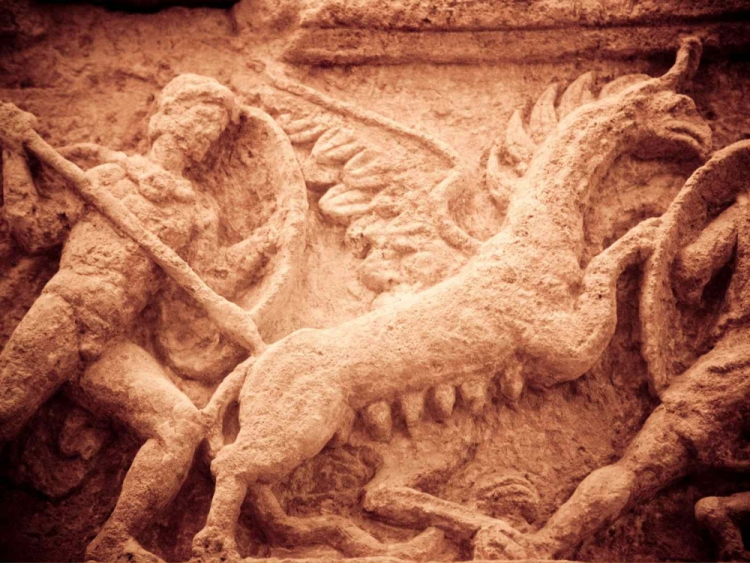
We complete our day at the Tarquinia Archaeological Museum which holds a trove of superb Etruscan art including ceramics, sarcophagi and the lovely Winged Horses, considered a masterpiece. (B, D)
Day 4: Cerveteri
Day 4: Cerveteri
Our explorations continue at Cerveteri (Etruscan Caisra), a flourishing Etruscan trade city. We visit the Banditaccia Necropolis where tumulus tombs arranged like a city of the dead, reflect evolving Etruscan beliefs from the 7th to 3rd centuries BC. The National Museum of Cerveteri houses masterpieces excavated from these tombs, most famously the Euphronios Krater, dating from around 515 BC, considered one of the finest Greek vases in existence. (B, D)
Day 5: Faliscians and Romans
Day 5: Faliscians and Romans
Travelling through the stunning landscape we climb up to Civita Castellana, home of the Faliscians, allies of the Etruscans who fought with them in the fourth century BC against Rome. Here we enjoy the Agro Falisco Archaeological Museum - located inside the Renaissance era Forte Sangallo - where we peruse objects from this distinct culture. We continue to Falerii Novi, a planned Roman city with intact walls built after the destruction of Faliscian town in 241 BC. Wandering the almost intact perimeter walls and impressive entrance gate to the Via Armerina is a perfect way to end the day. Drive to Orvieto and our hotel for 3 nights. (B, D)
Day 6: Chiusi, Sarteano and the Tomb of the Infernal Chariot
Day 6: Chiusi, Sarteano and the Tomb of the Infernal Chariot
We travel north into the lush Tuscan landscape to Chiusi and its National Museum to engorge further on Etruscan art and inscriptions that illuminate the city’s role as a major Etruscan centre. A short distance away is the Civic Museum and ‘Underground City’ where we view ingenious Etruscan water tunnels and a stunning epigraphic collection which has allowed scholars to construct an ‘Etruscan Registry’ of families and their position in society. In the afternoon we drive to Sarteano to visit one of the most spectacular and memorable attractions surviving from Etruscan times: the remarkable Tomb of the Infernal Chariot (4th century BC), a rare painted chamber showing a demonic charioteer and underworld procession. (B, D)
Day 7: Orvieto
Day 7: Orvieto
We spend the day exploring Orvieto, a town with ancient Etruscan foundations, and prime candidate for the town of Volsinii. Here we marvel at the underground city built into a complex of over 1,200 caves and comprising sophisticated water cisterns that made the settlement self-sufficient in water. Our visit concludes at the Museo Fainia where we admire a wealth of Etruscan art and artefacts including intricate bronze votive offerings. (B, D)
Day 8: Palazzo Farnese, the gardens of Bomarzo and departure
Day 8: Palazzo Farnese, the gardens of Bomarzo and departure
On our last day we visit the sixteenth-century Palazzo Farnese at Caprarola, a Renaissance masterpiece, demonstrating the continuity of classical architecture over the centuries. As a final visit we explore the unusual Garden of Bomarzo, a monumental sculpture park built by Pier Francesco Orsini, a sixteenth century mercenary and patron of the arts. Here we wonder over a range of classically themed creations and enjoy the beautiful park surroundings, a tranquil finale to our tour.
Proceed to Rome Fiumicino airport where the tour ends unless you are returning with us to London. (B)