
Operation Marita
The German Invasion of Greece 1941
Tour Introduction
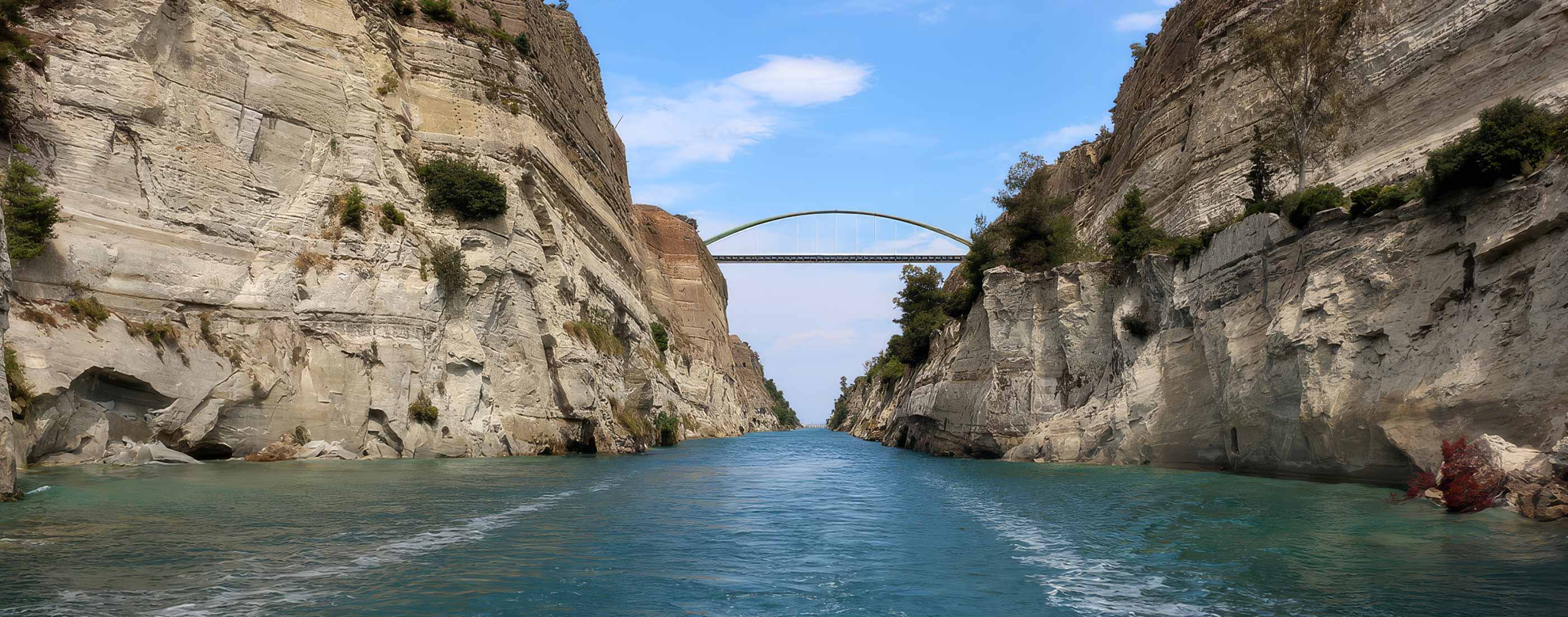
During this eight-day tour of Greece, as we journey south from the mountainous Bulgarian borderlands, we marvel at the dramatic scenery where every turn seemingly reveals a captivating aspect of that country’s momentous history and well-loved mythology: the imposing forts of the Metaxas Line in Northern Greece that still dominate the surrounding countryside; Mount Olympus, home to the Greek gods, and the magical Vale of Tempe both of which formed the backbone of the Allied first line of defence; the pass at Thermopylae held by the Spartan 300 in 480BC and New Zealand warriors some 2,400 years later; Athens, home to democracy and headquarters of the German occupying forces; and the Corinth isthmus which has witnessed the march of armies throughout time.
Whilst our main focus is on the campaign of April 1941, we take a considerable interest in the Persian invasions of 480 and 490 BC.
Highlights
- Remote Metaxas Line forts
- The defence of the Haliacmon Line
- The ancient battles of Thermopylae and Marathon
- ‘W’ Force’s fighting withdrawal
- The German airborne landings at Corinth
- Athens during occupation and revolt
- The naval heritage park at Piraeus
Tour Details
Interested in this tour but not ready to book? Register your interest using the link below and we will keep you updated on the progress of the tour.
Expert Guides

Col Bob Kershaw
Robert Kershaw retired as a full Colonel following thirty-four years with the Parachute Regiment. He commanded his own battalion and saw active service in Northern Ireland, the first Gulf War and Bosnia. He was German General Staff qualified, and FRHists and BA (Hon). Having written fifteen books, he is an acknowledged international expert on the war in the East, has conducted numerous battlefield tours there and is published in over a dozen countries, which include Germany and Russia. Extensively interviewed on TV, he has written and had books serialised in the mainstream press. His publications on the German perspective of Arnhem and Dunkirk have been considered ground breaking. You can view his website at http://robertjkershaw.com/
Background
The Metaxas Line was constructed only a few years before the outbreak of WW2, its purpose being to prevent or delay any attack from Bulgaria.
But like the Maginot Line, it was compromised when the Germans outflanked it by invading Greece though Yugoslavia: after a determined defence, its forts were compelled to surrender following the capitulation of Thessaloniki.
To delay German southwards exploitation, the newly and hastily arrived Commonwealth soldiers, known as ‘W’ Force, had to quickly form a defensive line anchored upon the River Haliacmon which offered a few days’ resistance before it was itself outflanked following the Greek surrender in the northwest.
Thereafter, ‘W’ force commenced a desperate but effective fighting withdrawal through central Greece towards the port of Piraeus from where they expected to be evacuated.
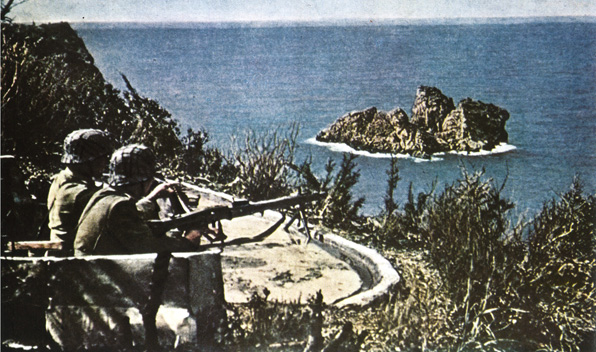
All the time they were harassed by an imaginative and aggressive German pursuit, culminating in the twin pronged airborne and motorcycle assaults on the Corinth Isthmus.
"Destruction of Greece will eclipse victories you have gained in Libya ….especially if we have shown ourselves callous of fate of allies"
Churchill to Wavell, 10 January 1941
What's Included
- Return flights from London (optional)
- Entrance fees for sites included in itinerary
- Dedicated Tour Manager
- Expert historians throughout providing a daily variety of talks, presentations and Q&A
- The company of like-minded travelers
- Dinner parties hosted by your expert historians and tour manager
- Meals as indicated in the itinerary
- Two drinks i,e wine or beer at each dinner and a welcome drink on first evening
- Helpful and friendly travel advice
- Tour information booklet
- Modern, comfortable, air-conditioned coach
Itinerary
Day1: Thessaloniki
Day1: Thessaloniki
Fly from London to Thessaloniki airport and transfer to our hotel or if making your own travel arrangements meet us at the hotel. Check in to Thessaloniki hotel for two nights. Enjoy late buffet supper. (D)
Day 2: Fort Roupel and the Metaxas Line
Day 2: Fort Roupel and the Metaxas Line
Drive to the mountainous Bulgarian border to discuss the tenacious Greek defence of a sector of the Metaxas Line assaulted by the XVIII German Mountain Corps. We visit Fort Roupel alongside the Struma River, blocking one of the primary German invasion routes through the Roupel Pass, to the plains beyond. The site, still maintained by the Greek Army offers commanding views, and the ability to explore a labyrinth of tunnels and bunkers that offered tenacious resistance until forced to surrender. (B,L,D)
Day 3: The 0lympus Aliakmon Line
Day 3: The 0lympus Aliakmon Line
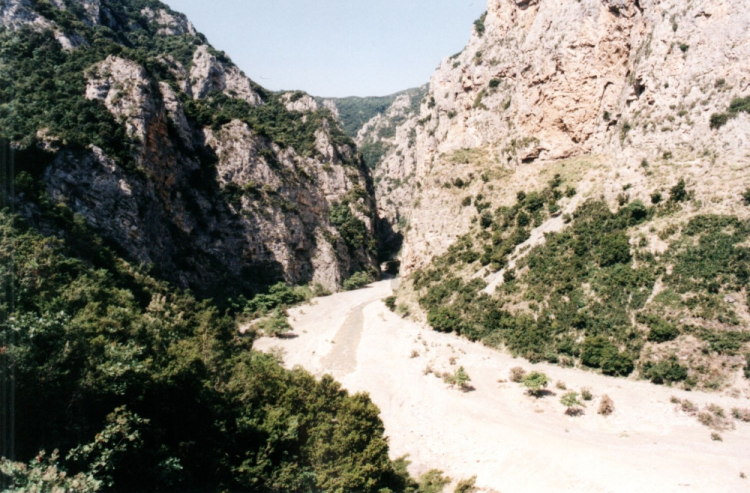
Drive south to the Olympus Aliakmon line, where the 4th New Zealand Brigade formed part of the Dominion 'W' Force holding the river crossing and pass at Servia against the German Kampfgruppe Sponeck. From there across the foothills of Mount Olympus to the Aegean coast and the defence of the Byzantine castle heights of Platamon by the New Zealand 21 Battalion, and the intense joint Australian and New Zealand delaying battle at the Pinios Gorge and Tempe, to save the Allied retreat from northern Greece. Continue to Larissa for the night. (B,L,D)
Day 4: Thermopylae and Brallos Pass
Day 4: Thermopylae and Brallos Pass
Examine the legendary stand in the pass made by the Spartans in 480BC, ground which was also held by the 6th New Zealand Brigade with elements from the Australian 6th Division blocking the Brallos Pass alongside to enable a general allied withdrawal to the coast and evacuation by the Royal Navy. Continue to Loutraki for two nights. (B,L,D)
Day 5: German Airborne Assault of the Corinth Canal
Day 5: German Airborne Assault of the Corinth Canal
The Saint Patapios monastery offers a panoramic view of the Corinth Isthmus and Canal. Explore the bridge sites across the spectacular Corinth Canal to interpret the audacious German parachute assault to capture the crossing site and block the allied retreat to the coast. Thence to the ruins of the spectacular natural fortification of Acro-Corinth, possibly the most impressive acropolis on mainland Greece. (B,D)
Day 6: Piraeus and Athens
Day 6: Piraeus and Athens
From his seat high above Piraeus, Xerxes watched the destruction of his Persian fleet at Salamis in 480BC. Visit the Hellenic Maritime Heritage Park where, amongst other ships, there is a full-sized working replica of an Athenian Trireme and discuss the destruction of Piraeus harbour by the German Luftwaffe. Check in to our central hotel for the last two nights followed by a visit to the Greek War Museum. (B,D)
Day 7: Athens World War II Tour
Day 7: Athens World War II Tour
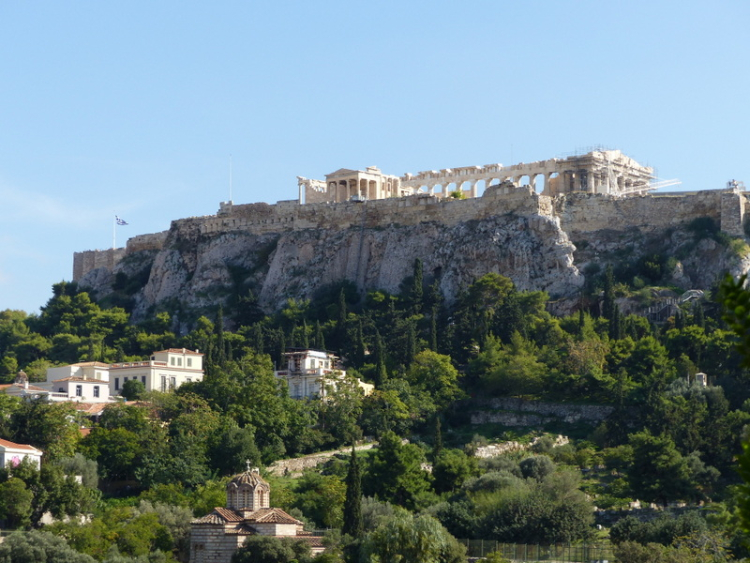
The day is spent exploring central Athens discussing the German occupation and the ensuing Greek civil war including Student's HQ at Grand Bretagne hotel, the fighting in Syntagma Square and around the Acropolis where the Greek communist ELAS resistance besieged the British liberation forces. (B,D)
Day 8: Evacuation
Day 8: Evacuation
A brief visit to the ancient battlefield at Marathon, the turning point of the Greco-Persian Wars in 490BC. Thence to Porto Rafti, to discuss the evacuation of the Kiwis and Australian forces in general. Continue to Athens airport for the return flight to London unless you have made your own travel arrangements. (B)