
King Ludwig II of Bavaria
Exploring the Life and Legacy of the ‘Mad King’
Tour Introduction
This 8-night and 9-day tour explores the life of King Ludwig II (r. 1845-1886), the celebrated and controversial ‘Mad King’ of Bavaria, alongside the history of his dynasty, the Wittelsbachs.
We trace the medieval roots of the family in elegant Munich, city of kings and emperors, visiting the magnificent Nymphenburg Palace, where Ludwig was born, and the grand Munich Residenz, where he first encountered the composer Richard Wagner.
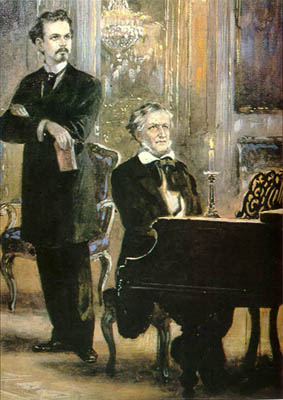
Through an examination of the complex relationship between monarch and composer, their artistic ambitions, political controversies, and mutual fascination, we follow the events that culminated in the premiere of Tristan und Isolde and Wagner's eventual exile to Switzerland.
Journeying through the dramatic landscapes of the Bavarian Alps, we visit Ludwig's three most extraordinary architectural legacies: Neuschwanstein, Linderhof, and Herrenchiemsee. We also explore sites closely connected to the king's life, including Hohenschwangau, together with landmarks that illuminate the region's rich cultural and religious heritage, such as the Pilgrimage Church of Wies and the magnificent Ettal Abbey.
Along the way, we examine the world of the renowned and notorious "King of the Alps" and consider the later appropriation of this landscape by Adolf Hitler at Berchtesgaden, an unsettling admirer of Ludwig's romantic vision. Our journey concludes on the shores of Lake Starnberg at Berg Castle, Ludwig's family residence turned asylum and the scene of his mysterious death, before returning to Munich and the king's final resting place.
Highlights
- Marvel at Ludwig’s magnificent gothic castle of Neuschwanstein
- View a range of spectacular palaces connected with Ludwig including the Nymphenburg, Hohenschwangau and Herrenchiemsee, ‘the Bavarian Versailles’
- Visit Berchtesgaden and the Eagles Nest where Adolf Hitler lived his Wagnerian nationalist dream
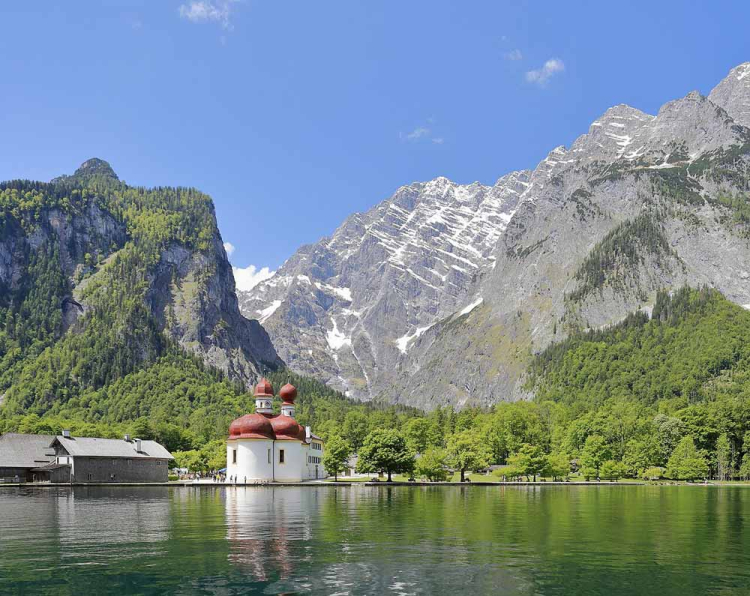
- Enjoy a peaceful boat ride on the Königssee, among Ludwig's most beloved alpine landscapes
- Stand at the site of Ludwig’s mysterious death at Lake Starnberg
Tour Dates
Interested in this tour but not ready to book? Register your interest using the link below and we will keep you updated on the progress of the tour.
Expert Guides

Mr James Timothy
James studied History at Cardiff University where he developed a passion for the history of European monarchy, with a particular interest in the Hohenstaufen, Habsburg and Wittelsbach dynasties. Under his well-established online pseudonym Apostolic Majesty, he has lectured widely and hosted seminars on a vast array of historical subjects, absorbing his audiences in political, cultural and conceptual history - often returning to the theme of royalty. James’s scholarship specialises in exploring the recuring elements of the royal archetype and Christian Kingship reflected through the lens of philosophers such as Dante and François Fénelon. He is particularly interested in how the great figures of antiquity such as Augustus and Alexander, and of the medieval world such as Frederick Barbarossa and Saint Louis, relate to the monarchs of the modern world chief among them Napoleon Bonaparte, Kaiser Wilhelm, Nicholas Romanov and ‘mad’ Ludwig of Bavaria. His YouTube channel can be found at https://www.youtube.com/@ApostolicMajesty/

Background
The Alpine realm between Lake Constance and Salzburg is a pocket of cultural and natural treasures beyond compare. The rich culture of southern Bavaria dates back to when the region was known as Raetia et Noricum by the Romans. Here are some of the oldest towns and monasteries in Germany. The ancient House of Wittelsbach - the family that defined Bavarian history - were legendary patrons of the arts and the Church. A legacy made manifest through hundreds of gothic, baroque and rococo monuments.
It is a testament to ‘mad’ King Ludwig that his nineteenth century creations have eclipsed those of his predecessors. Ludwig was an aspiring Louis XIV in a post French Revolution world and a pacifist in the era of Bismarck’s violent unification of Germany. He was a political failure, whose life ended in tragedy at Lake Starnberg, an event comparable in notoriety only to the Austrian scandal at Mayerling. Yet as the patron of Richard Wagner and the builder of ‘fairy tale castles’, Ludwig is responsible for the greatest works of German Opera and the inspiration for Walt Disney. If there is a romantic archetype for the modern world it is Ludwig II of Bavaria who declared: “I wish to remain an eternal enigma, even to myself.”
What's Included/
- Expert historian throughout providing a daily variety of talks, presentations and Q&A
- Dedicated Tour Manager
- The company of like-minded travellers
- Helpful and friendly travel advice
- Meals as indicated in the itinerary
- Two drinks i,e wine or beer at each dinner and a welcome drink on first evening
- Entrance fees for sites included in itinerary
- Tour information booklet
- Modern, comfortable, air-conditioned coach
Tour Itinerary
Day 1: Arrival in Munich
Day 1: Arrival in Munich
Fly from London to Munich airport and transfer to our hotel or if making your own travel arrangements meet us at the hotel. Welcome drinks and introductory talk from our expert historian. Hotel in Munich – 3 nights. (D)
Day 2: Munich: The House of Wittelsbach
Day 2: Munich: The House of Wittelsbach
On our first day in Munich, we explore the vaunted dynastic history of ‘Mad’ Ludwig’s Wittelsbach ancestors. Our exploration will include visits to the Alter hof, the medieval residence of the Dukes of Bavaria, the Frauenkirche where the early dukes are buried, and the Ruhmeshalle, Ludwig I’s (Ludwig II’s grandfather) Hellenic monument to Bavarian Glory. Finally, we visit the grandiose baroque Nymphenberg Palace, Ludwig’s birthplace. (B, D)
Day 3: Munich: Ludwig and Wagner
Day 3: Munich: Ludwig and Wagner
Our tour of Wittelsbach history continues with a visit to the sprawling Munich Residenz, seat of government and home of Bavarian nobility from 1508 to 1918. Here we tour the magnificent rooms and apartments that would have been so familiar to Ludwig and where he first met the legendary composer, Richard Wagner. We further explore the relationship between king and composer at the National Theatre, which under Ludwig’s patronage premiered four of the ten ‘Bayreuth Canon’ operas, and the Gärtnerplatztheater, acquired by Ludwig in 1870 to become Bavaria’s third royal theatre. Our day concludes at Brienner Straße, site of Wagner’s former Munich home before his banishment. (B, D)
Day 4: Lake Chiemsee: Ludwig & Louis XIV
Day 4: Lake Chiemsee: Ludwig & Louis XIV
Leaving Munich we drive to the lovely Lake Chiemsee, framed by the majestic Bavarian mountains which were such an inspiration to Ludwig. We make the short boat crossing to the Herreninsel where we visit the Herrenchiemsee, the Fairy Tale king’s final and most sumptuous palace project. Called the ‘Bavarian Versailles’ it is quite literally a copy of the Palace built by Louis XIV of France and stands as Ludwig’s homage to absolute monarchy. Here we wander the finely decorated suites and wonder at the vast Hall of Mirrors, a breathtaking marble staircase, and the ‘Wishing Table’, a concealed dining table inspired by the Grimm fairytale where the king could dine alone without serving staff. We briefly visit the Augustinian Monastery before the short boat trip back after which we continue to Berchtesgaden and our hotel for two nights. (B, D)
Day 5: Berchtesgaden: The Fairy Tale King and the Führer
Day 5: Berchtesgaden: The Fairy Tale King and the Führer
At Berchtesgaden we explore the common adoration of Ludwig and Adolf Hitler for Wagner and his potent fusion of nationalist and romantic ideas. Our day starts at the lofty Kehlsteinhaus or ‘Eagle’s Nest’, the ‘summit of power’ of the Nazi regime where the contrast between a murderous regime and an idyllic mountain setting are evident. We ascend in a golden brass elevator – designed to impress – and view the elaborate red marble fireplace, a gift to Hitler from Mussolini. Returning to Obersalzberg we view the nucleus of Nazi power before travelling to the idyllic Königssee where we take a boat trip to the isolated church of St. Bartholomew. In the tranquil stillness of the lake and mountains, we capture the Wagnerian idyll that so captivated both men, each possessed by his own peculiar madness. (B, D)
Day 6: In the Land of the Mountain King
Day 6: In the Land of the Mountain King
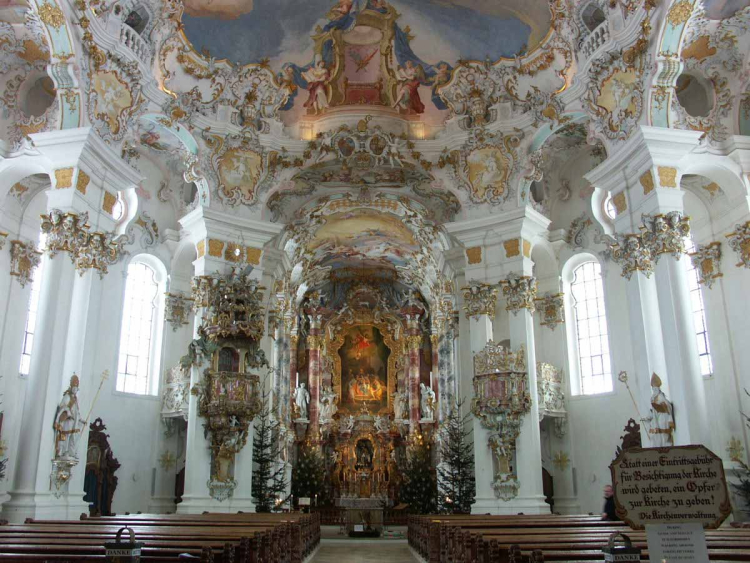
We visit the retreat of the Bavarian kings at the Berchtesgaden royal castle before driving through stunning Alpine scenery to Füssen, one of the oldest towns in Germany, and our hotel for three nights. We pause on our journey to visit the Pilgrimage Church of Wies, a masterpiece of Bavarian Rococo art and UNESCO World Heritage site. (B, D)
Day 7: Linderhof – the King's favourite Baroque wonder
Day 7: Linderhof – the King's favourite Baroque wonder
The first visit today is to the Museum of the Bavarian Kings where we examine a rich array of objects from the lives of King Ludwig II and his father King Maximilian II which sets the scene for our enjoyment of the remarkable castles built by father and son. Journeying through more breathtaking Alpine scenery we visit Linderhof, the second of Ludwig’s great castles, a UNESCO World Heritage site, and one of his favourite residences. Here we marvel over a ‘modest’ Rococo palace, the fanciful Venus Grotto inspired by Wagner’s Tannhauser, and exotic Moorish Kiosk where Ludwig drank tea attended to by servants in oriental costumes. We return to Füssen via the beautiful Ettal Abbey, founded in 1330 by the Emperor Ludwig IV ‘the Bavarian’, and along with Wies among Germany’s most iconic examples of Rococo architecture. (B, D)
Day 8: A King's Fairy Tale Castles: Hohenschwangau and Neuschwanstein
Day 8: A King's Fairy Tale Castles: Hohenschwangau and Neuschwanstein
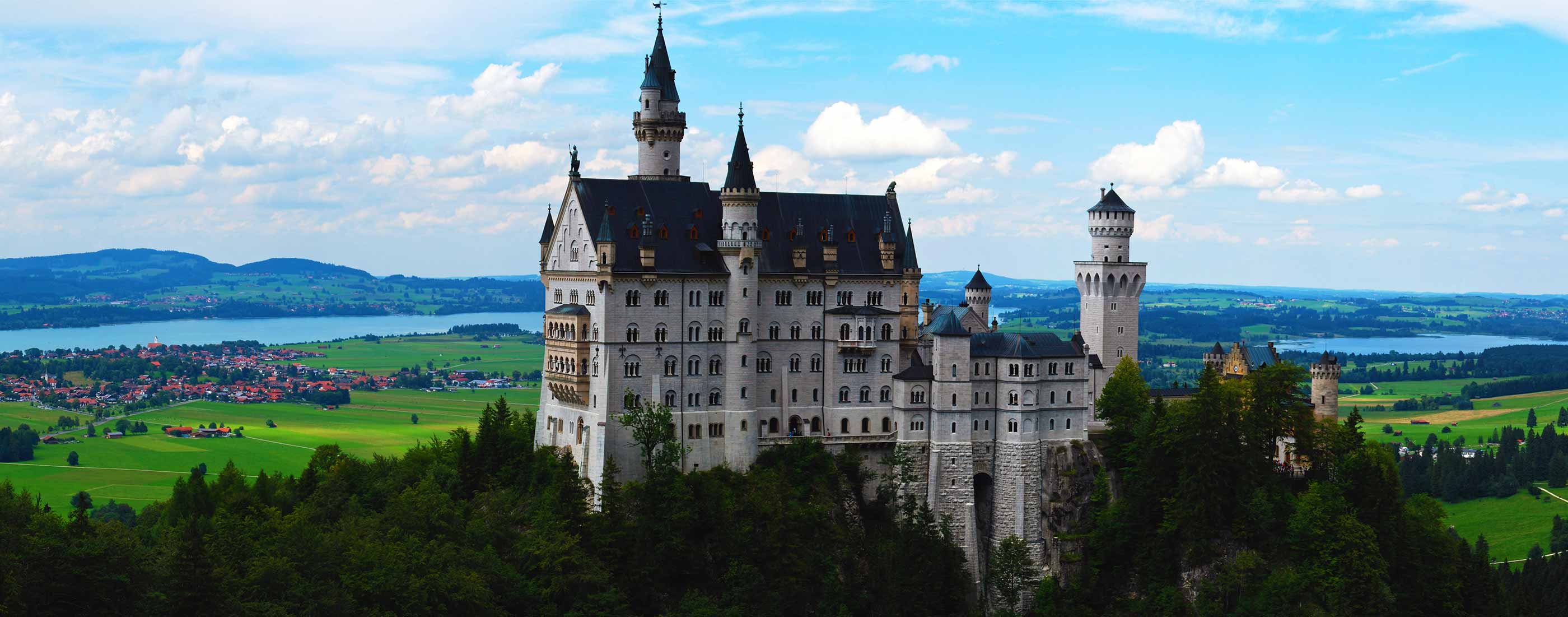
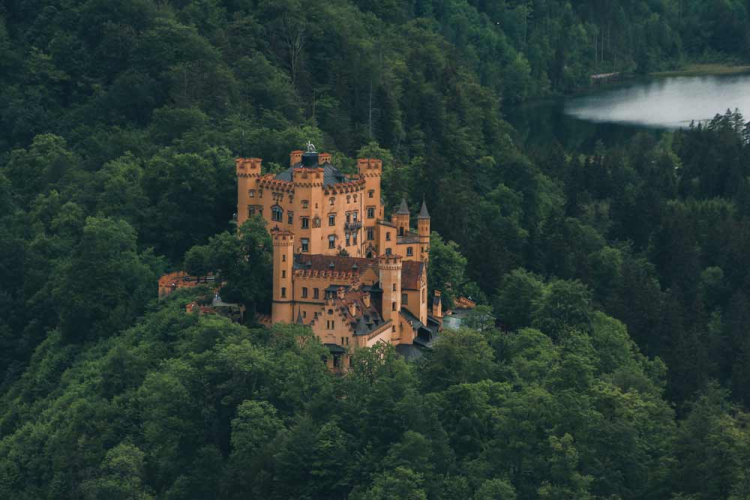
We spend the day exploring the most impressive legacies of Ludwig’s artistic imagination - Hohenschwangau and Neuschwanstein castles - where we obtain a fascinating insight into the man’s imagination and love with the past. Hohenschwangau was Ludwig’s childhood retreat and here his imagination was fired by the stunningly decorated Oriental Room, Hall of Heroes and Hohenstaufen Room where Richard Wagner played the piano to the young prince. Captivated by Wagner’s Lohengrin Ludwig decided to create his masterpiece nearby and Neuschwanstein has become perhaps the most archetypal medieval castle in existence (and inspiration for Sleeping Beauty’s Castle). On our guided tour we step into a romanticised medieval world marvelling over the lavishly appointed Throne Hall, Hall of Singers and Drawing Room. Ludwig himself would describe his ‘New Swan Stone’ as ‘Holy and unapproachable’. (B, D)
Day 9: Lake Starnberg and Munich: The Mad King
Day 9: Lake Starnberg and Munich: The Mad King
On our return to Munich we stop at Lake Starnberg, site of the final tragic act in mad Ludwig’s life. We view Berg Castle (outside only) once a family retreat for the Wittelsbachs but transformed into an asylum for the deposed Ludwig. Here we hear about the mysterious events of 13 June 1886 when Ludwig’s body, along with that of his personal physician, were found in the lake nearby. The cause of their deaths remain a mystery to this day. A short walk from the castle takes us to the spot marked by a cross where we reflect on the life of Bavaria’s most eccentric but best-loved king. We continue to Munich to visit Ludwig’s tomb at St. Michael's Church, before finishing the day at the Maximilian Park and the Angel of Peace monument. Here our narrative of Bavaria's enigmatic king ends with an epilogue for Ludwig and the end of the Wittelsbach dynasty in Bavaria.
Travel to Munich airport for the return flight to London unless you have made your own travel arrangements. (B)
- The Swan King: Ludwig of Bavaria published by I.B.Tauris (2012)