
Macedon
The Kingdom of Philip II and Alexander the Great
Tour Introduction
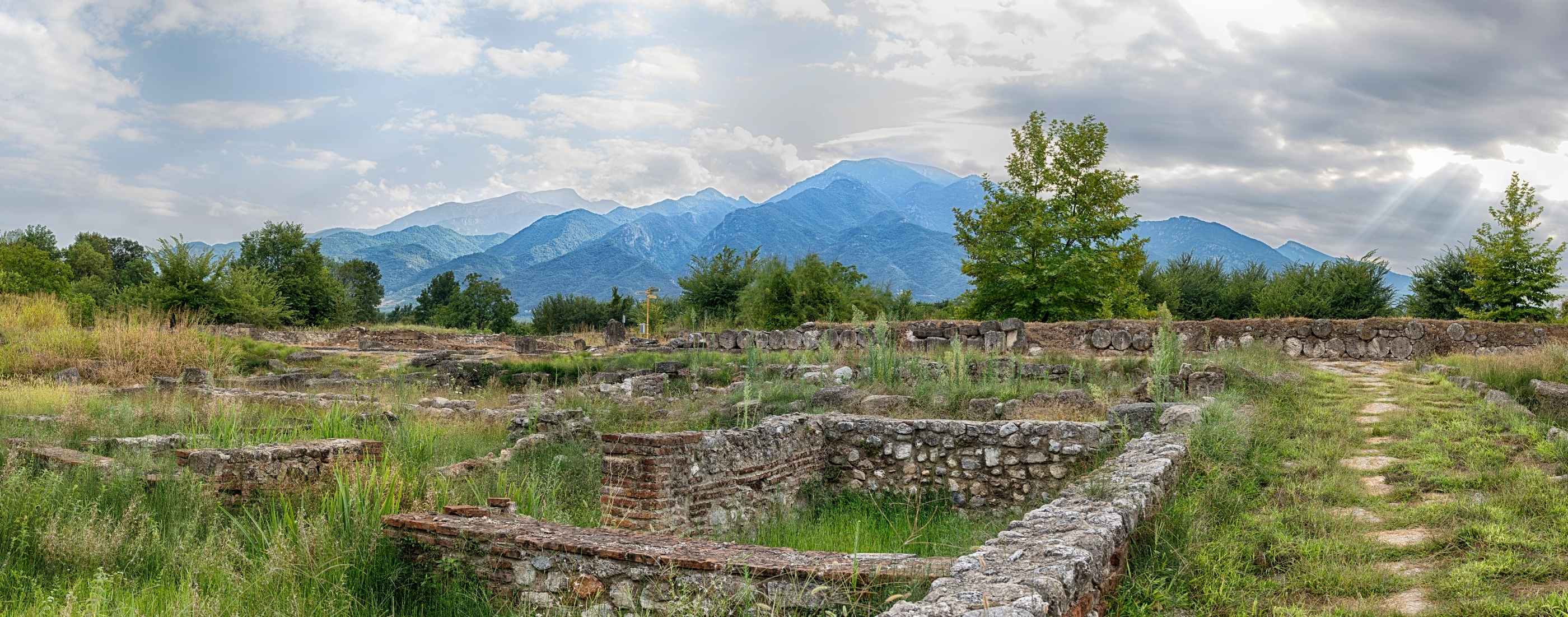
In this wide-ranging expert-led tour we explore the culture and history of Macedon, focusing especially on the reign of Philip II and the early years of Alexander the Great (359-334BC); the crucial years when Macedon was transformed from a backwater into the centre of the Classical world.
We will walk in the footsteps of the young Alexander and his tutor Aristotle at Mieza, stroll through the extraordinarily well preserved streets of the city of Olynthus, and retrace the final journey of Philip, standing on the spot where he was assassinated, before entering his world famous tomb.
Highlights
- Visit Vergina, Philip II’s capital and site of his incredible tomb
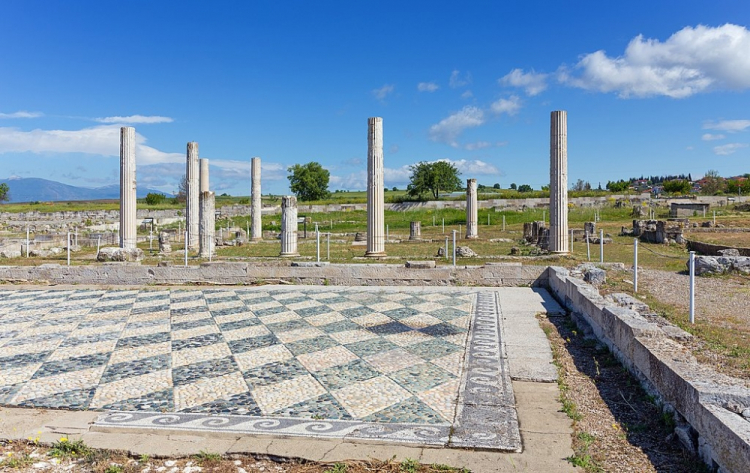
- Visit the evocative cities of Pella, Veroia, Olynthus and Amphipolis
- Enjoy the magnificent view over sacred Mt Olympos from the ancient city of Dion
- Expore the city of Thessaloniki with its rich heritage and world-renowned archaeological museum
Tour Details
Interested in this tour but not ready to book? Register your interest using the link below and we will keep you updated on the progress of the tour.
Expert Guides

Aristotle Koskinas
Aristotle Koskinas studied classical archaeology at the University of Ioannina, Greece, where he specialized in the study of rooftiles and architectural terracottas. For several years he participated in various excavations conducted by the Greek Ministry of Culture. He took part in the surface survey project conducted in Western Achaia by the Center for Greek and Roman Studies of the National Research Foundation, as well as in the Sicyon surface survey conducted by the University of Thessaly. He published material from both projects.
In 2003 Aristotle graduated from the Greek School of Tourist Guides and has since been working as a guide. He is also an accomplished narrator and a regular participant (by invitation of the National Archaeological Museum and the Greek Narration Festival) to participate in their yearly narration events.
He lectures on Greek history and archaeology, while continuing to study and publish material from excavations of the Ministry of Culture. His other interests lay in the field of military history and conflict archaeology and he has been involved in historical reenactment events.
Background
Macedon was a land of gold and timber, of wide plains and rugged uplands, of hard drinking noble horsemen, who lived by the heroic values of the poetry of Homer and loved the plays of Euripides. Their kings, emersed in blood feud and treachery, lived and died by the sword.
Although in the eyes of the Classical Greeks to the south they were no better than barbarians, the Macedonians created, not only an empire, but some of the finest art and architecture surviving from the ancient world.
When Philip II, the father of Alexander the Great, came to the throne in 359BC the kingdom of Macedon was surrounded and on the verge of extinction. In the West Philip's elder brother and thousands of his best warriors had been killed by Illyrian tribesmen. In the South the Greek city of Athens was poised to invade, as were the Thracians to the East, and the Paeonians in the North. To make matters yet worse there were numerous pretenders to the throne.
Twenty three years later, Philip had reduced all his former enemies to subjects by a combination of diplomacy and warfare, as well as piety and treachery. Macedon was transformed into the richest and most powerful state ever seen in Europe. Philip stood ready to begin the conquest of the mighty Persian empire.
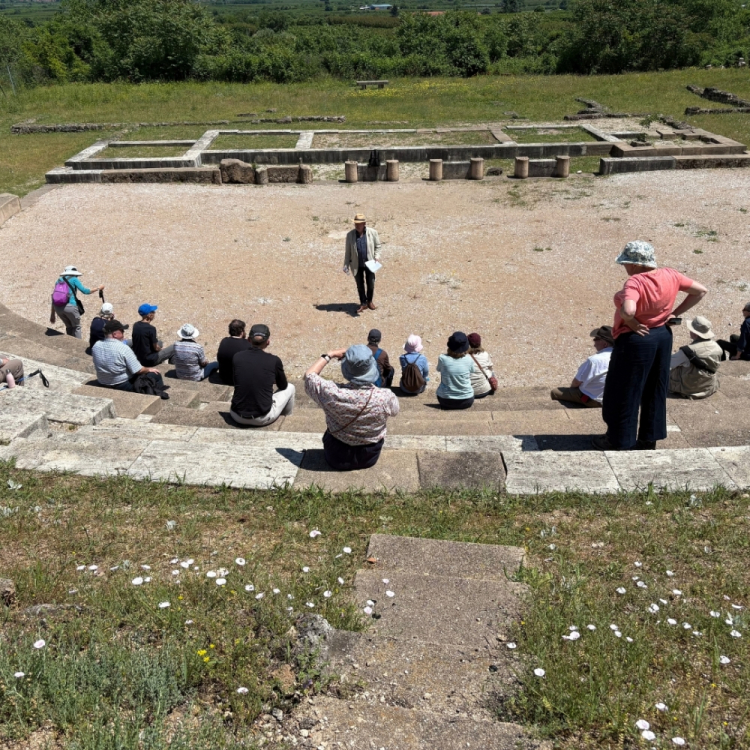
Then, at the height of his power, he was struck down by a spurned lover in the theatre at Vergina. Civil war threatened, all the subject peoples rose in revolt. The new king was only twenty years old. But the new king was Alexander the Great.
"My child, you must seek a kingdom equal to yourself; Macedonia is not big enough for you."
Philip II
What's Included
- 4 Star Hotel
- Return flights from London (optional)
- Dedicated Tour Manager
- Entrance fees for sites included in itinerary
- Expert historians throughout providing a daily variety of talks, presentations and Q&A
- The company of like-minded travelers
- Meals as indicated in the itinerary
- Dinner parties hosted by your expert historians and tour manager
- Two drinks i,e wine or beer at each dinner and a welcome drink on first evening
- Helpful and friendly travel advice
- Tour information booklet
- Modern, comfortable, air-conditioned coach
Itinerary
Day 1: Thessaloniki
Day 1: Thessaloniki
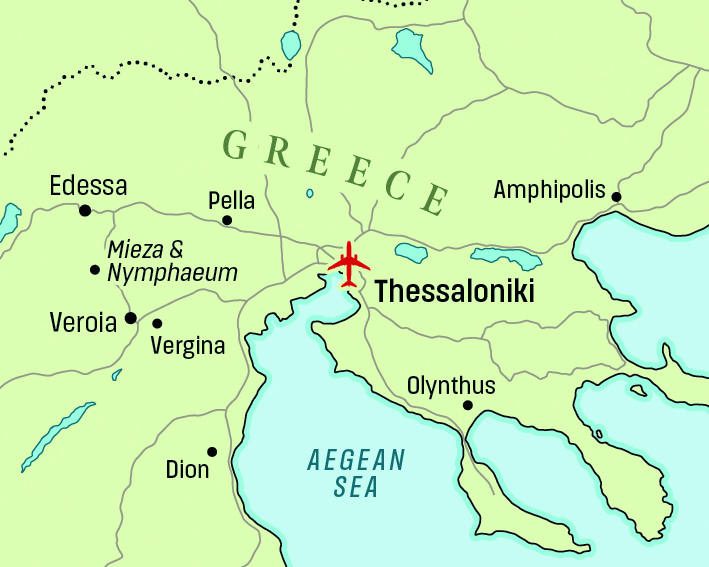
Fly from London to Thessaloniki airport and transfer to our centrally located hotel, which serves as our base throughout the tour, or if making your own travel arrangements meet us at the hotel. (D)
Day 2: Edessa and Pella
Day 2: Edessa and Pella
Our tour starts at the charming hill town of Edessa, known as the ‘city of waters’. According to tradition the 1st Macedonia capital was founded here by King Caranus. Edessa offers a chance to pose with an alternative statue of Alexander, but the real draw is the cascading waterfalls that tumble away from the edge of town. We drive to Pella, the capital of the Kingdom of Macedon and birthplace of Alexander the Great, where we visit the fantastic site and museum. Here we will have the chance to admire the famous mosaics. Return to Thessaloniki to view the Arch and Palace of Roman Emperor Galerius (r. 305-311). Pre-dinner drinks and introductory talk. (B,D)
Day 3: Veroia, Mieza & Nymphaeum
Day 3: Veroia, Mieza & Nymphaeum
Today we drive to Veroia (Veria), the prosperous second city of ancient Macedon, where we visit the museum with its valuable collection of sculpture and inscriptions. Among these is the famous Gymnastic Law, reflecting the city’s sports games named held in honour of Alexander the Great. In the afternoon we move on to Mieza (Lefkadia), home of Alexander’s tutor Aristotle. . Here we view the painted tombs, Nymphaeum and `School of Alexander and Aristotle`. (B,D)
Day 4: Dion
Day 4: Dion
We drive along the coast to the ancient city of Dion, named after its famous Macedonian sanctuary dedicated to Zeus (Dios means 'of Zeus'), leader of the gods. We spend time at the site and museum and if clear enjoy the magnificent views over the sacred Mount Olympus, home of the gods. Return to Thessaloniki to admire the Archaeological Museum, repository of the world's finest collection of ancient Greek art. (B, D)
Day 5: Amphipolis
Day 5: Amphipolis
This morning we enjoy a beautiful drive on the side of the Thermaic Gulf into Chalkidiki to the Greek polis of Olynthus. After concluding an alliance with Athens Philip of Macedon laid siege to the city in 348 BC. After two citizens betrayed the city he looted and razed it to the ground and sold its population into slavery. We have time to admire the city streets and powerful defensive walls before our return to Thessaloniki. (B, L, D)
Day 6: Olynthus
Day 6: Olynthus
A long but pleasant drive east today to the magnificent site of Amphipolis. This is where Alexander the Great prepared for his campaign to invade Asia in 335 BC. After Alexander's death his wife Roxana and their son Alexander IV were imprisoned and murdered here. At the nearby Kasta burial mound, an ancient Macedonian tomb has been revealed. We will also be able to view the Lion of Amphipolis monument a 4th-century BC tomb sculpture. The evening is yours to explore the culinary delights of Thessaloniki. (B, L)
Day 7: Vergina
Day 7: Vergina
Today we return west to visit what is probably the highlight of the trip - the incredible site of Vergina (Aegae), Philip II's capital of Macedon, and UNESCO World Heritage Site. It was in the theatre here in 336 BC that Philip was assassinated and his son Alexander succeeded to the throne. In the 1970s the tombs of the kings of Macedon were discovered here including Philip's which had not been looted. We will see the spectacular treasures from these tombs in the museum, perhaps the finest in Greece, as well as the palace and theatre. (B, D)
Day 8: Home
Day 8: Home
Depart hotel for Thessaloniki airport for the return flight to London unless you have made your own travel arrangements. (B)
- Alexander the Great published by Penguin (2004)