
Plantagenet France: Intrigue, War, Collapse
Featuring Eleanor of Aquitaine
Tour Introduction
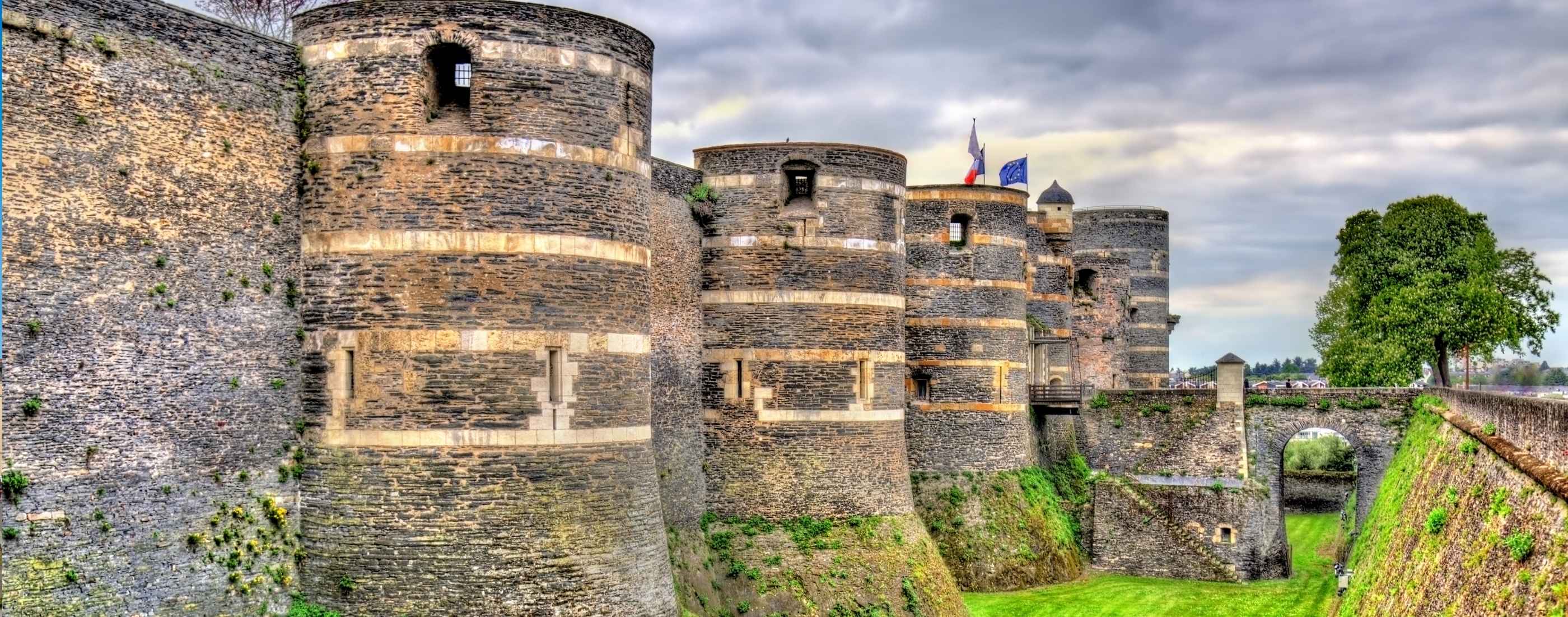
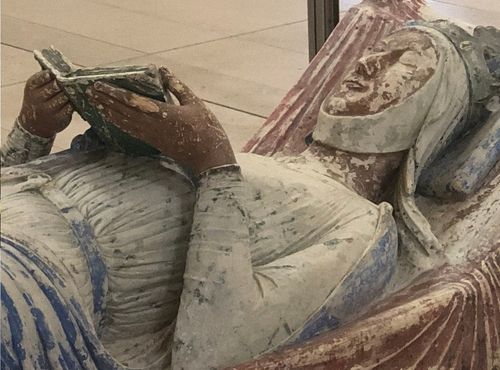
The Plantagenet dynasty dominated what we now call France from its origins in Anjou in the twelfth century to its demise in the fifteenth and left its mark on English history after Henry II’s accession to the throne in 1154. Through a series of visits to castles, abbeys, cathedrals, palaces, museums, and even complete medieval towns, this superb tour provides a highly enjoyable journey through the places where France’s history was made. From the origins of the Anjou dynasty in Angers we will explore some of the most evocative medieval sites in Europe including the castles of Saumur, Chinon, Langeais and Loches. The religious life of the times will be illuminated at the fantastic abbeys of Épau and Fontevraud, the latter the burial place of Eleanor of Aquitaine, her husband Henry II and their son Richard I, better known in English history as the ‘Lionheart’.
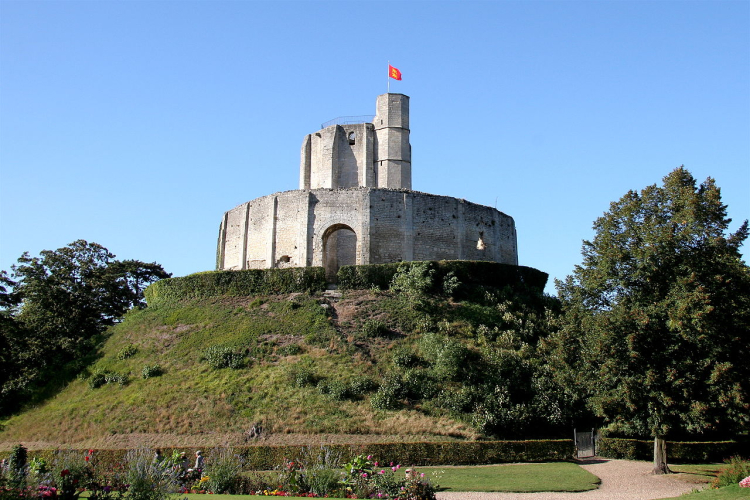
The turbulent political history of the times is also a theme of this tour and a full day is spent exploring the Vexin region, scene of bitter territorial fighting between the Angevin kings of England and the Capetian dynasty of France. The monolithic castles of Gaillard and Gisors are stern testimony to this period.
Set against the lush background of rural France and based in the beautiful cities of Tours and Rouen, this expert-led tour is a brilliant way of deepening your knowledge of medieval France and, indeed, the historical origins of France and England. And all accompanied by excellent accommodation, memorable French cuisine and, of course, delicious wines.
Highlights
- Visit the historic towns of Angers, Poitiers, Tours and Le Mans, the Cité Plantagenêt
- Explore the life of one of the medieval world’s most remarkable women, Eleanor of Aquitaine
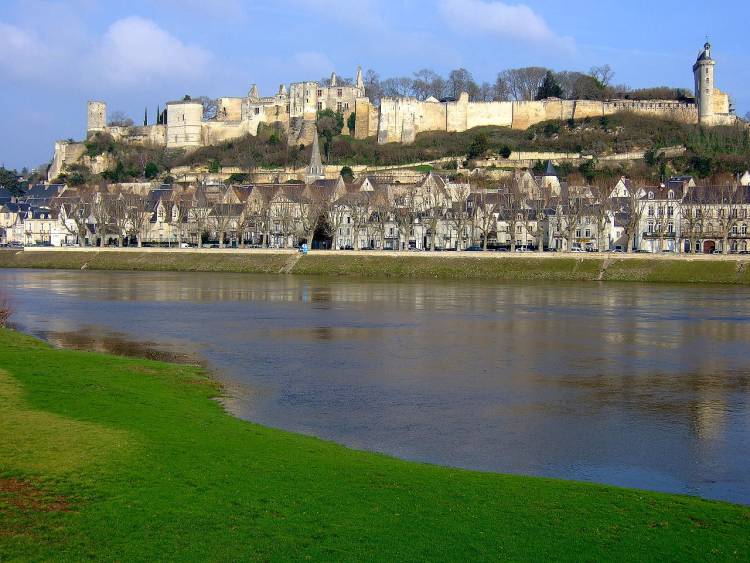
- Visit or view the stunning castles of Chinon, Saumur, Langeais, Loches and Gaillard
- Marvel at the beautiful cathedrals of Rouen, Poitiers and Le Mans
- Visit the complete royal city of Loches with its five centuries of amazing medieval history
- Enjoy the peaceful surroundings of the abbeys of Fontevraud and Épau
Tour Details
Interested in this tour but not ready to book? Register your interest using the link below and we will keep you updated on the progress of the tour.
Expert Guides

Aurzelle da Silva
Aurzelle da Silva grew up in the arts in New York City, where her parents were both painters and her father a professor. She held a scholarship in ballet and did her studies in literature and writing. She has always been fascinated by medieval art and history, and after receiving a biography of Eleanor of Aquitaine when she was 10, knew that living in history was a life goal. She moved to France in 2003, and went back to school to do a Masters, this time to study one of her main passions, medieval art history, and specifically Romanesque wall painting, at the University of Poitiers. There, she had the opportunity to study Plantagenet history under the great French specialist, Martin Aurell, as well as deep study under her director in medieval art history. Her research on the wall painting of the Plantagenet in Chinon was published with their support by the Centre d’études supérieures de civilisation médiévale, which is a branch of the Nation Centre of Scientific Research in France. She works as a history guide in France and is also doing research for other publications.
Background
The Plantagenet dynasty is said to have received its name from a habit of Geoffrey (1113-51), Count of Anjou, who wore a yellow sprig of broom (genêt is French for the planta genista, or broom shrub) in his hat. Geoffrey’s son Henry ruled lands in both Anjou and Normandy adding Aquitaine after his marriage to Eleanor of Aquitaine in 1152 and succeeded to the throne of England in 1154.
This dynasty was one of medieval Europe’s most successful, ruling for over 300 years in England. But its origins in Anjou meant that it held court mostly at Angers and Chinon.
The Angevin Empire (as this branch of the Plantagenet dynasty became known) soon ruled half of French territory and came into contact with the Capetian kings of France to whom they owed feudal loyalty. The rivalry between the dynasties resulted in a long series of wars and the gradual reconquest of Angevin territory by the Capetians.
Pitched battles were relatively rare in this conflict which was dominated by raids and skirmishes. The large number of castles in the region meant that sieges were common and the huge and evocative sites at Chinon, Montsoreau and Château-Gaillard are powerful reminders of this era (although many have been embellished by later Renaissance additions).
Under John (r. 1199-1216) England lost most of its French possessions resulting in the demise of the Angevin Empire and the rise of the Capetian. In the Hundred Years War (1337-1453) Plantagenet England won back most of its continental possessions but lost them again ignominiously.
But what is left are beautiful cathedrals, tranquil abbeys, imposing castles and a spectacular palace which powerfully evoke Angevin history and culture.
What's Included
- 4 Star Hotels
- Return Eurostar Plus from London (optional)
- Entrance fees for sites included in itinerary
- Dedicated Tour Manager
- Expert historians throughout providing a daily variety of talks, presentations and Q&A
- The company of like-minded travelers
- Meals as indicated in the itinerary
- Two drinks i,e wine or beer at each dinner and a welcome drink on first evening
- Helpful and friendly travel advice
- Access to the Cultural Experience app
- Tour information booklet
- Modern, comfortable, air-conditioned coach
- Internal train journeys
Itinerary
Day 1. Arrival
Day 1. Arrival
Travel from London St Pancras with Eurostar to Paris Gare du Nord station where the group assembles. Move by taxi to Paris Montparnasse station from where we travel by train to Tours and our hotel for 5 nights. (D).
Day 2. Angers - cradle of the Plantagenets
Day 2. Angers - cradle of the Plantagenets
Today we travel by coach to Angers, the cradle of the Plantagenet dynasty, and home to the fascinating castle with the remains of the Palace of the Counts of Anjou. Here we will view the incredible Apocalypse Tapestry, woven between 1377 and 1382, and a significant artifact from this period. We admire the superb Gothic architecture at the Collegiate Church and Cathedral before returning to Tours. (B, D).
Day 3. Fontevraud Abbey and the Loire
Day 3. Fontevraud Abbey and the Loire
We start the day at the stunning Abbey of Fontevraud, perhaps the highlight of the tour. The site became the favourite residence of Eleanor of Aquitaine (1124-1204), one of the most remarkable women in medieval Europe, whose tomb lies in the nave alongside that of her husband Henry II of England and son Richard I the Lionheart. Our day continues with an exploration of several beautiful sites along the Loire: we admire the enormous castle of Saumur (outside only), bequeathed to the Plantagenets in the eleventh century. We then move on to Montsoreau where we pause to view the outside of the beautiful castle, its precursor taken by Henry II of England in 1152 in a feud with his brother. We continue to the castle of Langeais with its turbulent history of occupation in turn by the Counts of Blois and Anjou before becoming a Plantagenet possession in the twelfth century. Return to Tours. (B, D).
Day 4. Poitiers – Eleanor's city
Day 4. Poitiers – Eleanor's city
Our day starts at the exquisite medieval town of Chauvigny, one of the best-preserved towns of the era in France. Here we admire the remains of five castles and the Saint Pierre Collegiate Church, an architectural jewel of the Poitou. The rest of the day is spent exploring the beautiful city of Poitiers. At the Grand Palace of the Dukes of Aquitaine we marvel at one of the most spectacular examples of medieval architecture in France closely linked to the story of Eleanor. Duchess of Aquitaine, Queen of France and England, and mother of two kings, Eleanor clearly left her mark on the city including the Saint-Pierre Cathedral which we visit. We also admire the Baptistery of St John, the oldest existing Christian building in France, with its stunning Romanesque and Gothic wall paintings. (B, D).
Day 5. Chinon and Loches - Plantagenet strongholds
Day 5. Chinon and Loches - Plantagenet strongholds
We drive to the stunning castle of Chinon, standing sentinel above the river Vienne. A pivotal stronghold in Henry II’s defences it played a key role in his reign and he died here in 1189. We then move to the evocative Royal City of Loches, a complete medieval royal city with a history spanning five centuries and besieged several times in the wars between Plantagenets and Capetians. Customers eat at their own expense this evening. (B).
Day 6. Le Mans - Cité Plantagenêt
Day 6. Le Mans - Cité Plantagenêt
Today we travel to Le Mans, the Cité Plantagenêt, in whose cathedral in 1128 Geoffrey of Anjou, the founder of the Plantagenet dynasty, married Matilda of England. After visiting the Cathedral we enjoy the collections at the Plantagenêt Museum before moving to the Royal Abbey of Epau, the finest example of Cistercian architecture in France. It was founded by Berengaria of Navarre, Richard the Lionheart’s widow, in 1229. Our journey continues to Rouen and our hotel for two nights. (B, D).
Day 7: Day 7. The Vexin cockpit
Day 7: Day 7. The Vexin cockpit
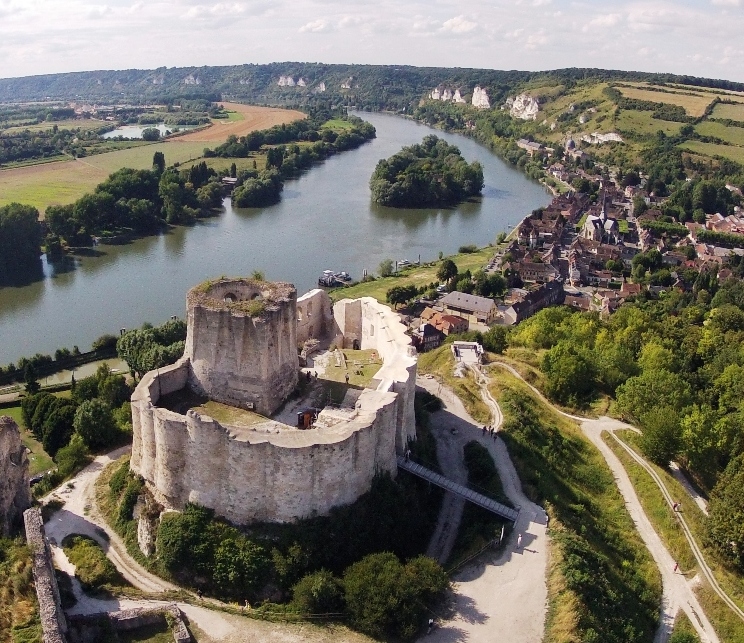
Today we visit the Vexin, long a bitterly disputed area between Capetian and Angevin dynasties. We drive to Gisor where we explore the formidable castle built to protect the Norman possessions of the Plantagenet English king against encroachment by the Capetians. In the afternoon we move to the imposing Château-Gaillard, built by Richard the Lionheart from 1196 above the River Seine, and taken in a lengthy siege by Philip II of France in 1204. Here we admire a castle advanced in its design which uses early principles of concentric fortification and some of the earliest examples in Europe of machicolations. (B, D).
Day 8. Rouen and departure
Day 8. Rouen and departure
Morning in Rouen where we admire the striking Gothic cathedral, the epitome of the new Gothic style. Travel by fast train to Paris and then to Paris Gare du Nord station where the tour ends (unless you are returning with us to London St Pancras via Eurostar). (B).
- The Plantagenets published by William Collins (2013)
- The Plantagenets: The Kings That Made Britain published by Quercus (2014)