
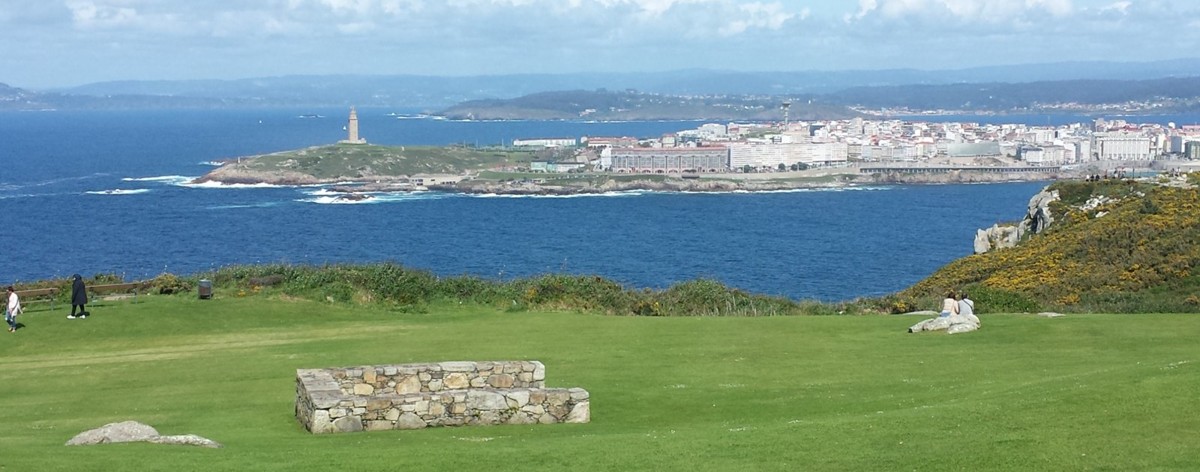
Retreat to Corunna
Sir John Moore’s winter campaign and Soult’s march towards Porto, 1808–09
Tour Introduction
Moore’s retreat to Corunna saved Britain’s only field army and shaped the war that followed. Tracing the campaign in the exact sequence it unfolded, this journey sweeps from the windswept plains of Castile through the rugged mountain passes of Galicia to the river valleys of northern Portugal.
Stand on the ground where British cavalry outfought Napoleon’s finest horsemen, follow the dramatic line of Moore’s winter retreat to the Atlantic coast, and trace the subsequent French invasion across the Portuguese border, seeing how Soult’s seizure of Porto and Marshal Ney’s check in Galicia set up the pivotal Talavera campaign of July 1809.
Along the way, balance vivid battlefield exploration with the region’s rich cultural heritage, discovering Gaudí’s whimsical architecture, intact Roman fortifications, historic naval harbours, and the sacred streets of Santiago de Compostela during the 2027 Holy Year.
Tour Details
Interested in this tour but not ready to book? Register your interest using the link below and we will keep you updated on the progress of the tour.
Highlights
- A faithful journey along the route shared by Moore’s army and pilgrims
- Explore Astorga where Moore’s army divided and Gaudí built his fairytale palace
- Walk Lugo’s Roman walls, a World Heritage Site, where Moore offered battle
- Trace the fighting at Corunna, where Sir John Moore fell
- Visit Ferrol, scene of the 95th Rifles’ first action in 1800
- Discover Santiago de Compostela and its cathedral in the 2027 Holy Year
Included
- 7 nights’ hotel accommodation with breakfast and 6 dinners. Optional scheduled flights from London to Madrid and Porto to London.
Background
In late 1808, Britain committed its only field army to Spain. Sir John Moore marched from Portugal to aid Spanish forces, only to discover Napoleon had already scattered them and retaken Madrid. Gambling boldly, Moore struck north at Marshal Soult’s isolated corps along the River Carrión. That thrust drew Napoleon racing across the Guadarrama mountains to trap him, forcing the British into a brutal midwinter retreat of some 400 kilometres across León and Galicia towards the Atlantic coast.
Through blizzards, starvation, and collapsing discipline, Moore’s cavalry and Reserve fought a desperate series of delaying actions until reaching Corunna. There, on 16 January 1809, the exhausted redcoats turned and beat off Soult’s assault, buying the fleet time to evacuate the army at the cost of Moore’s life.
Yet the struggle for north-western Iberia was far from over. While the main British force sailed home and Craufurd’s light brigades escaped via Vigo, Soult turned south to invade Portugal, fighting his way inland via Ourense and Chaves to storm Porto on 29 March.
That occupation shaped Sir Arthur Wellesley’s first move when he returned to Lisbon in April. In Galicia, a fierce uprising and a Spanish stand that checked Marshal Ney in June were followed by the French abandoning the province. This secured Wellesley’s northern flank but freed both marshals to march south against his rear during July’s Talavera campaign.
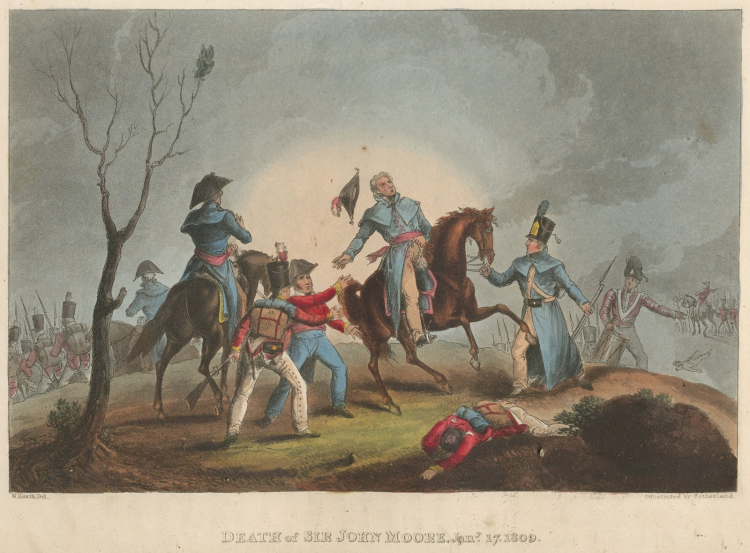
“Not a drum was heard, not a funeral note,
As his corse to the rampart we hurried;”
Charles Wolfe, ‘The Burial of Sir John Moore after Corunna’ (1817)
Your Expert Historian

Major General Ashley Truluck CB CBE BA
Ashley has enjoyed a particularly varied career, changing tack at least five times. He puts this down to a low threshold of boredom; his ‘friends’ say he just kept getting sacked!
Sailor: Starting out as a deckhand aboard sailing vessels, he eventually became an Ocean Skipper and Master Mariner. Carrying this over into his army career, he led many ‘Adventurous Training’ sailing expeditions; set a record for the fastest Trans-Atlantic crossing under sail; and circumnavigated the World including sailing in Antarctica and rounding Cape Horn.
Soldier: In his mainstream Army career, he served worldwide and commanded at every operational level from Gurkha platoon, to armoured troop, airmobile squadron, regiment, brigade, as Commander Far East Garrisons, and as NATO Assistant Chief of Staff at Supreme Headquarters Allied Powers Europe.
Strategist: Retiring as a major general, he became a Strategic Advisor for UK MOD and Defence Industry; and led modernisation programmes for the London Law Courts and the national Fire & Rescue Services.
Sheriff: His extra-mural voluntary appointments have included Honorary Colonel of his regiment, Admiral of an ocean sailing club, Chair of a number of national and regional charities, and acting as HM High Sheriff of Wiltshire.
Scholar: He is now indulging his life-long passion for military history as Chairman / Vice President of the Society for Army Historical Research and is actively involved with the British Battlefield Trust. A former client, he acted as consultant to The Cultural Experience and these days enjoys organising and leading a few of their scheduled & bespoke tours to locations as varied as Waterloo, Spain, Portugal, France, Malta and Vietnam. His specialisations are Wellington, command & control, and the Light Division.
Explore our Napoleonic battlefield tours, including the campaigns of Wellington, or browse our battlefield tours across other periods.
Itinerary
Day 1 - Madrid to Valladolid
Fly from London to Madrid airport where the group assembles. Drive to Valladolid for our first night. Welcome drink and introductory talk. (D)
Day 2 - The Advance and the Turn
Begin at Medina de Rioseco, where Bessières defeated Blake and Cuesta in July 1808, then cross the Castilian plains to Sahagún, where Lord Paget’s 15th Hussars charged Debelle’s cavalry and Moore learned that Napoleon was marching on him. See the Esla bridge at Castrogonzalo, held by Craufurd’s Light Brigade, and the water meadows below Benavente, where Lord Paget’s cavalry routed the Chasseurs of the Imperial Guard. Overnight in Benavente. (B,D)
Day 3 - The Retreat
Follow the retreat into the mountains of León. At Astorga, sacked by both Spanish and British troops and where the army divided, enjoy a guided visit of Gaudí’s fairytale Episcopal Palace. Cross the mountains to Bembibre, scene of notorious British disorder, and Cacabelos, where Rifleman Tom Plunket’s long-range shot killed General Colbert as he urged on his skirmishers. Overnight in Villafranca del Bierzo. (B,D)
Day 4 - Over the Mountains of Galicia
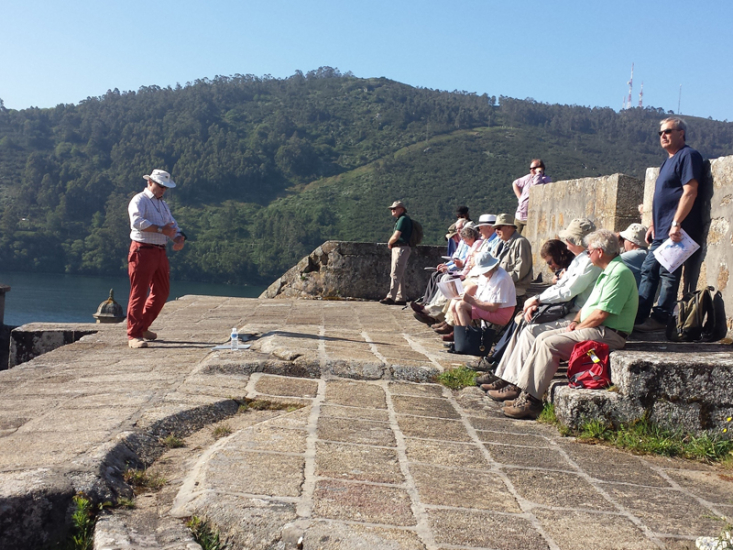
Climb the Pedrafita pass behind Edward Paget’s Reserve, the rearguard that held off Soult’s pursuit. Near Nogales see where the military chest was discarded, and at Constantino the bridge the 28th and 95th held until dark. At Lugo, the only place before Corunna where Moore offered battle, walk the Roman walls. At Betanzos Sergeant Newman of the 43rd rallied stragglers, and at El Burgo engineers blew the Mero bridge. Overnight in A Coruña. (B,D)
Day 5 - The Battle of Corunna
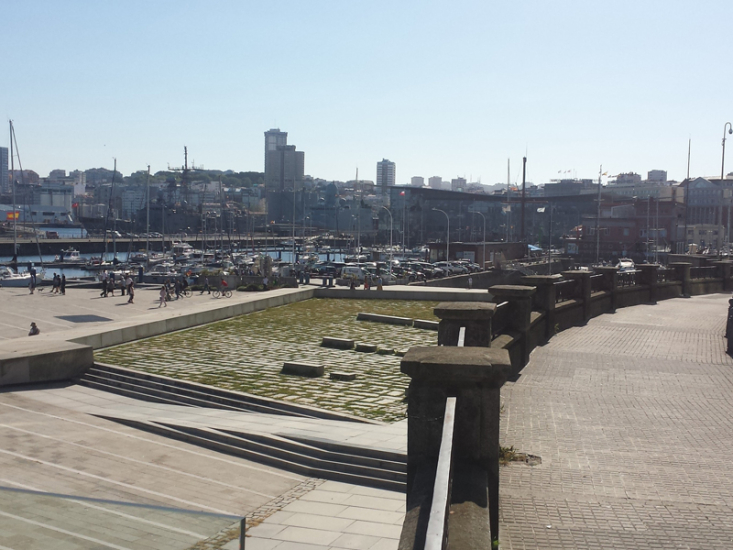
Although much of the battlefield of 16 January 1809 has since been swallowed by modern urban sprawl, from the surviving high ground we trace the fighting at Elviña and Monte Mero that cost Sir John Moore his life while saving his army. Visit the Military History Museum, then pay respects at his tomb in the tranquil San Carlos Garden. The rest of the day is at leisure, with dinner at your own expense. (B)
Day 6 - The Tower of Hercules and Ferrol
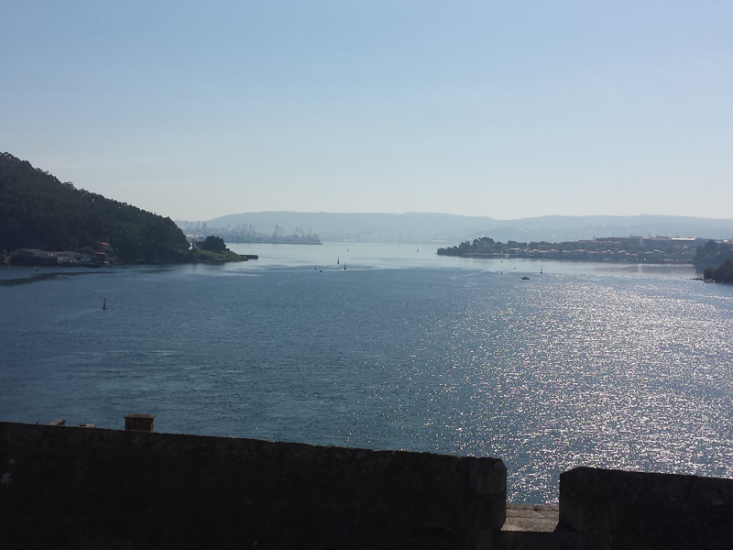
Begin at the Tower of Hercules, the ancient Roman lighthouse and UNESCO World Heritage Site. Continue to the historic naval port of Ferrol to visit the Naval Museum before following the British expedition of 1800, the 95th Rifles’ first operation, from the landing beach at Doniños to the heights of Brión and the Castillo de San Felipe guarding the entrance to the estuary. Return to A Coruña for dinner. (B,D)
Day 7 - Santiago, Ponte Sampaio and Vigo
Drive to Santiago de Compostela for a guided tour of the city and its cathedral in the 2027 Holy Year. At Ponte Sampaio trace the two positions from which Spanish forces halted Marshal Ney’s river crossing in June 1809, stalling the French in Galicia. In Vigo enjoy the vista from O Castro over the ría where the light brigades embarked, then walk to the square where the French surrendered. Farewell dinner and overnight in Vigo. (B,D)
Day 8 - Soult’s Invasion of Portugal
Stop first at Tui to see why Soult’s attempt to force the River Miño failed, then cross the river to the star fort of Valença and continue to Braga, which Soult seized in March 1809. After lunch, visit the Castelo de Lanhoso overlooking the battlefield of Carvalho d’Este, where on 20 March the French routed the Portuguese. Travel to Porto airport where the tour ends unless you are returning with us to London. (B)
Recommended Reading List
- Corunna 1809 published by Osprey Publishing (2001)
- The Peninsular War Atlas published by Osprey Publishing (2014)
- The Peninsular War, A New History published by Penguin (2003)
- The Spanish Ulcer published by Da Capo Press (2001)
Tour Diary
View images of our 2018 Retreat to Corunna tour here
Tour Review
Take a look at some independent reviews of this tour by previous participants here