

The Romans in Provence
Provincia Nostra
Tour Introduction
Some of the finest remains of the Roman Empire are to be found in the beautiful landscape of Provence.
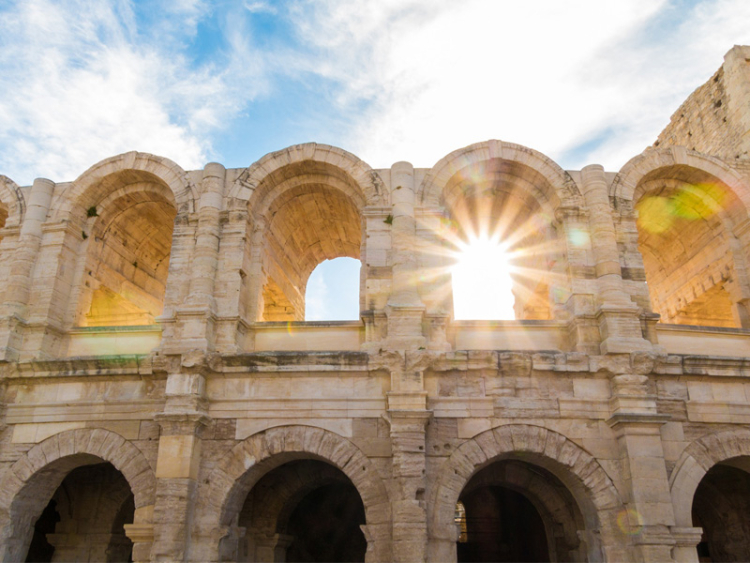
During this comprehensive archaeological tour we explore Nimes, with its amphitheatre, Gate of Augustus, enigmatic tower (the Tour Magne), and wonderfully preserved temple (the Maison Carrée), and nearby Arles, which boasts an equally impressive amphitheatre, as well as a theatre, the Baths of Constantine, and the superb museum of antiquities.
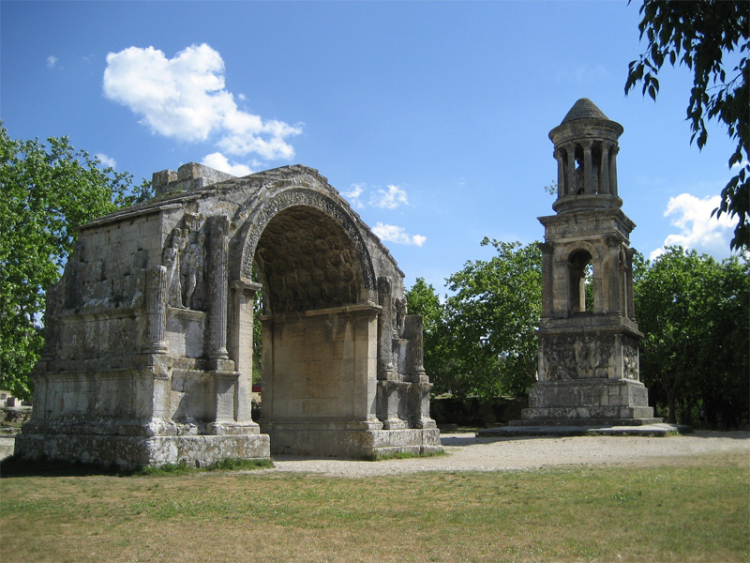
We see the public face of Roman power in the triumphal Arch at Orange and the Pont-du-Gard aqueduct, and private life in the homes and funeral monuments at Glanum (St.-Remy-de-Provence) and Vaison-La-Romaine.
During a relaxed paced holiday based in the lovely city of Nimes, “the Rome of France”, each day we will drive to a different Roman site to explore its archaeological remains on foot with frequent stops to interpret the history and enjoy our historian’s vignettes.
Tour Details
Highlights
- Spend the full day exploring the city of Nimes
- Visit the Temple of Diana and the Maison Carrée
- Explore the archaeological district of Vaison La Romaine
- See the Roman Bridge over the river Ouvèze
- Explore the labyrinthine corridors and passageways of the Amphitheatre of Arles
- Spend a whole day at the archaeological site of Ambrussum
- Explore the magnificent aqueduct known as the Pont du Gard
- Visit the Théâtre Antique d'Orange, one of the finest remnants of the Roman Empire
Dr Andy Fear
Dr Andy Fear was born in Morecambe and educated at Lancaster RGS and New College Oxford where he obtained his BA and D Phil (on Roman Spain). After a brief spell at Jesus, Oxford he went on to teach Classics at the Universities of Keele and Manchester. An ardent Hispanophile, his academic interests and publications cover the provinces of the Western Roman Empire (especially Britain and Spain), ancient and medieval Warfare, and the Iberian peninsula. He also has a strong interest in transport history. He spends his spare time wargaming and watching Morecambe FC.
Background
The French region of Provence takes its name from the Latin Provincia. The Romans established their first territory north of the Alps in 125 BC. Officially it was the provincia of Gallia Narbonensis, but it became known as just the Province, hence Provence.
From here Julius Caesar conquered the rest of Gaul (58-52 BC). Several colonies of veterans from the Roman legions were founded, including Arles and Nimes. The locals rapidly adopted Roman culture and were seen as more civilised than those living in northern, or 'long-haired' Gaul.
The Province produced famous writers, including the orator Favorinus, and possibly the great Latin historian Tacitus, as well as many Roman Senators and the emperors Antoninus Pius (138 – 161 AD) and Carus (282 – 283 AD). The towns of this peaceful and wealthy province flourished and have left us some of the most spectacular and evocative archaeological remains in the whole empire.
What's Included
- 4 Star Hotels
- Return flights from London (optional)
- Dedicated Tour Manager
- Expert historians throughout providing a daily variety of talks, presentations and Q&A
- Entrance fees for sites included in itinerary
- The company of like-minded travelers
- Meals as indicated in the itinerary
- Two drinks i,e wine or beer at each dinner and a welcome drink on first evening
- Helpful and friendly travel advice
- Tour information booklet
- Modern, comfortable, air-conditioned coach
Itinerary
Day 1 - Arrival
Day 1 - Arrival
Fly London to Marseille or make your own arrangements to join the tour at the hotel. Travel to Nimes, where we check-in to our hotel, our base for the tour, and relax in time for welcome drinks and an introductory talk before dinner. (D).
Day 2 - Nimes
Day 2 - Nimes
We spend the full day exploring the city, including the amphitheatre, the Tour Magne (or the Great Tower), and the Porte d'Auguste, a remnant of the Augustan fortifications which demonstrated the power of the colony of Nimes over the Volcae. We will visit the Temple of Diana and the Maison Carrée; the latter one of the best-preserved Roman temples in the world, offering a window into the regime introduced by the Emperor Augustus. (B, D).
Day 3 - Vaison La Romaine
Day 3 - Vaison La Romaine
The archaeological district of Vaison La Romaine, known as Puymin, boasts a theatre, shops, the Nymphea (a fountain and pools), the so-called "Sanctuaire à Portiques", an area containing the “House with the wreathed Apollo” and the Roman Bridge over the river Ouvèze, built in the 1st Century AD. (B, D).
Day 4 - Arles
Day 4 - Arles
In Arles we wander the labyrinthine corridors and passageways of the Amphitheatre and stand on the tiers and imagine the gladiatorial combat. We also visit the theatre, the Baths of Constantine, the only remaining part of the imperial Palace, and the superb archaeological museum at the edge of the town. (B, D).
Day 5 - Ambrussum
Day 5 - Ambrussum
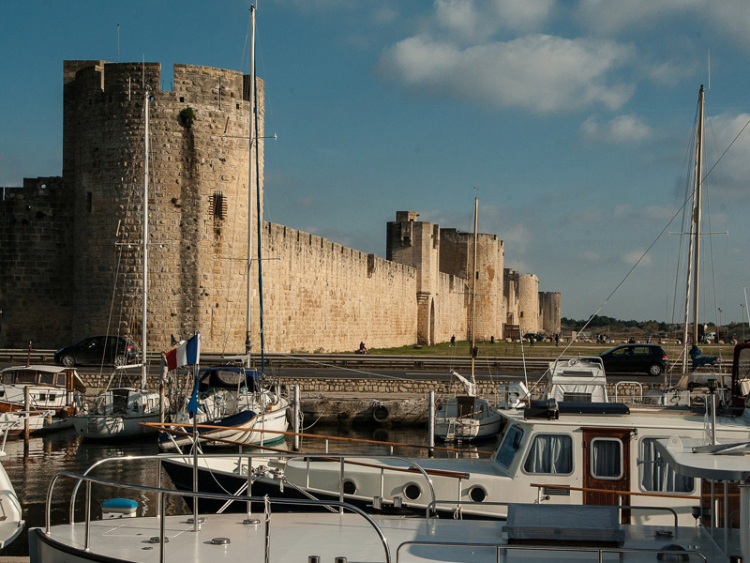
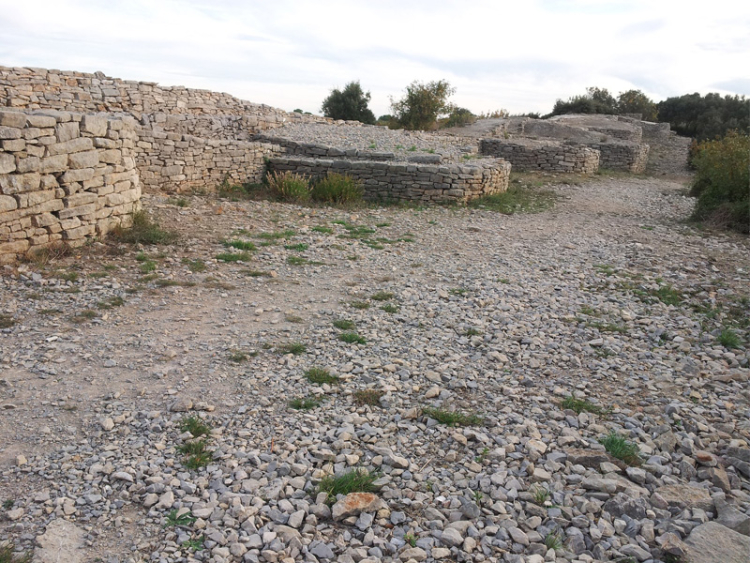
We spend the day at the archaeological site of Ambrussum, to appreciate how native Gauls adopted Roman culture. We explore the Pont Ambroix, a 1st Century BC Roman bridge, the on-site museum and the ongoing archaeological excavations. Thence to the charming medieval town of Aigues-Mortes where we find lunch and time to explore, perhaps walking its perfectly preserved and imposing walls and towers to gain magnificent views of the town and the strange red salt lagoons. (B, D).
Day 6 - Pont du Gard and Orange
Day 6 - Pont du Gard and Orange
We explore the magnificent aqueduct known as the Pont du Gard, built in the 1st Century AD to carry water to the Roman colony of Nimes. Thence to Orange with its Triumphal Arch, built during the reign of emperor Augustus (27 BC-AD 14) to honour the veterans of the Gallic Wars; the Museum of Art and History housed within a 17th Century mansion; and the Théâtre Antique d'Orange, one of the finest remnants of the Roman Empire. Dinner is not included this evening and you are free to find your own restaurant. There is also the option to dine with your tour manager and historian at your own expense. (B).
Day 7 - Les Antiques/Glanum and Saint-Remy
Day 7 - Les Antiques/Glanum and Saint-Remy
We begin the day at wonderful Glanum where we find Les Antiques, a mausoleum and arch of the 1st Century BC. We stroll through the well-preserved streets and houses which demonstrate the processes by which the local Gauls acquired Roman culture. Thence to nearby Saint-Remy for a lunch break and to explore the Hôtel de Sade Museum, a Renaissance mansion housing the fascinating finds from Glanum. (B, D).
Day 8 - Depart
Day 8 - Depart
Travel to Marseille airport where the tour ends unless you are returning with us to London. (B).
Recommended Reading List
- Becoming Roman: The Origins of Provincial Civilization in Gaul published by Cambridge University Press (1998)
- Roman France: An Archaeological Field Guide published by Tempus Pub Ltd (2001)
- Roman Gaul: The Three Provinces, 58 BC-AD 260 published by Routledge (2015)
- The Sons of Remus: Identity in Roman Gaul and Spain published by Harvard University Press (2017)