
The Grandeur of Ancient Rome
Built of Bricks, Clothed in Marble
Tour Introduction
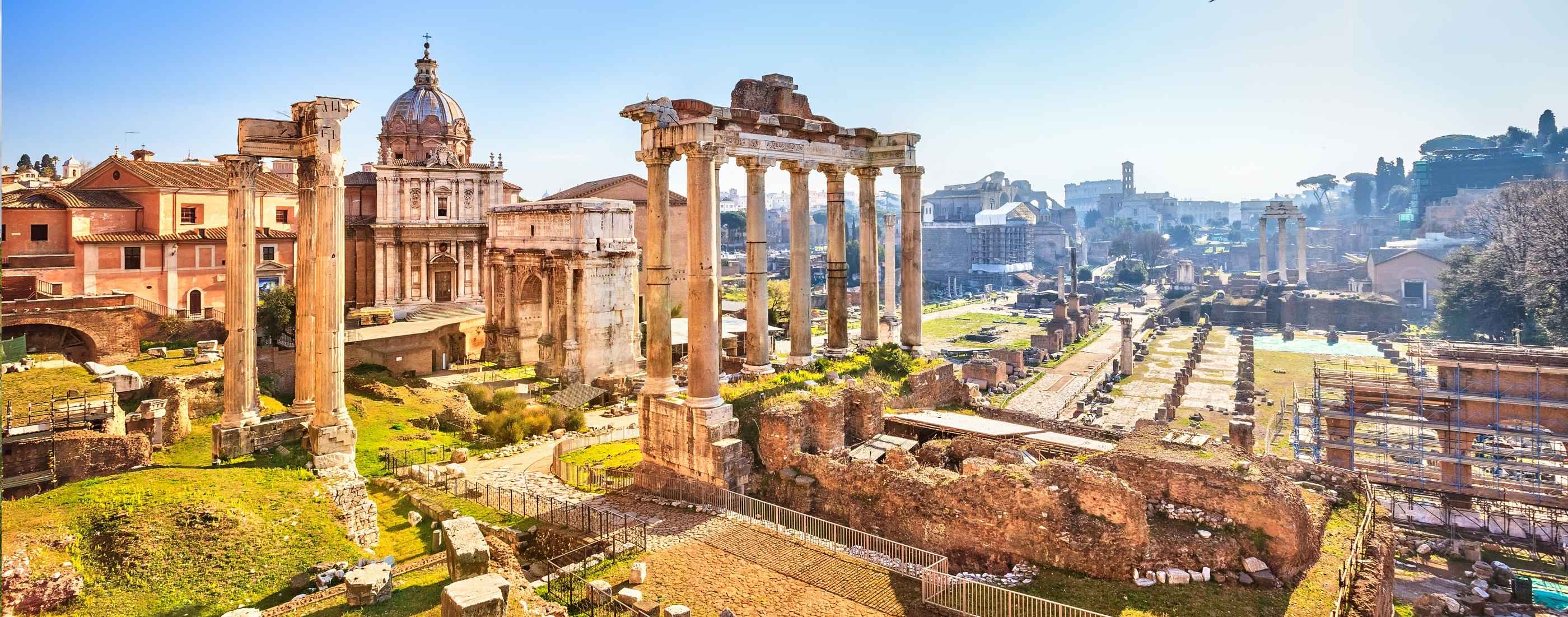
In the company of our expert historian we explore the eternal city’s major archaeological sites to realise the full grandeur of Ancient Rome.
At each monument, work of art and building, we will explain who built or erected them, highlight important characteristics and interpret their purpose.
Through a series of in-situ vignettes we discuss how and where Roman society functioned and see evidence of the impact of its laws, class structure, military, education, government, economy, religion, art and even cuisine.
Our tour will take us to the private dwellings of the Palatine, the civic buildings of the Forum, the mighty Colosseum, Imperial mausoleums, martial columns, the ancient port of Ostia and Hadrian’s villa at Tivoli.
Based out of our centrally located hotel, the majority of our exploration will be on foot or by public transport, so ensure that you bring comfortable walking shoes.
Highlights
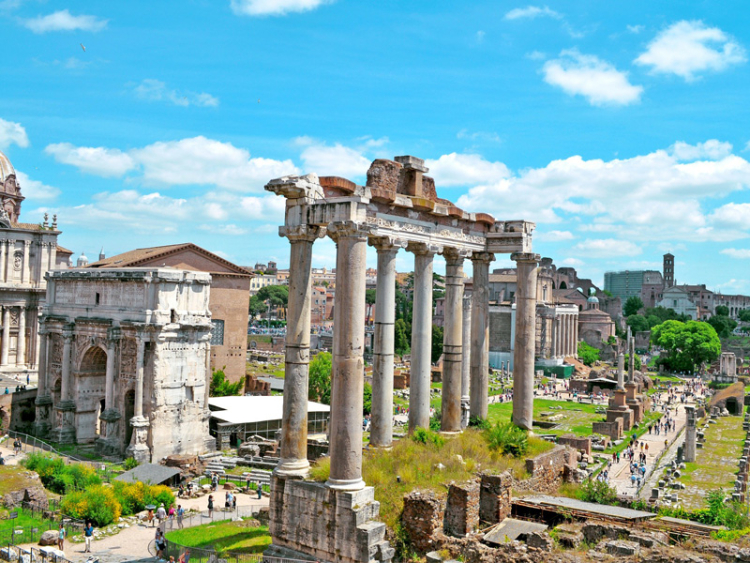
• Explore some of ancient Rome’s most evocative sites including the Forum, Colosseum, Arch of Constantine and Pantheon
• Ascend the Palatine Hill, often referred to as “the first nucleus of the Roman Empire”
• Venture under the church of San Clemente
• Spend a whole day at Hadrian’s Villa, one of the most extraordinary Roman archaeological sites in Italy
• Explore the archaeological complex of Trajan’s Market
• See the victory Column of Marcus Aurelius and Trajan’s Column
Tour Details
Interested in this tour but not ready to book? Register your interest using the link below and we will keep you updated on the progress of the tour.
Expert Guides
Dr Simon Elliott
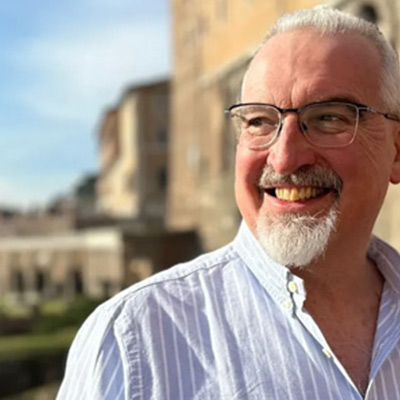
Dr Simon Elliott FSA is an award winning and best-selling archaeologist, historian and broadcaster. He has a PhD in Classics and Archaeology from the University of Kent, where he is an Honorary Research Fellow, a masters Degree in Archaeology from UCL, and a masters Degree in War Studies from KCL.
Simon has published numerous books on Classical World themes, including a BBC History top 10 book of the year and a Military History Matters book of the year, and frequently appears on broadcast media as a presenter and expert on the ancient world.
Background
To paraphrase the historian, Livy, Gods and men chose the Seven Hills as the site for the salubrious capital of what was to become the greatest empire of the ancient world because of its position in the very heart of Italy.
Surrounded by fertile plains, its navigable river brought produce from the inland regions, facilitated seaborne commerce from abroad and yet was far enough from the sea to avoid the danger of foreign fleets.
From its mythical founding around 750BC, the hegemony of Rome spread first through Italy, then across the whole Mediterranean. Rome's conquests, above all of the Greeks, profoundly changed its culture and architecture.
As the empire grew, so Rome transitioned from monarchy to republic, then, via murderous civil wars, back to the autocracy of the emperors.
Each era left behind indelible architectural footprints that remain for us to explore during our seven days in Rome.
What's Included
- 4 Star Hotel
- Return flights from London (optional)
- Entrance fees for sites included in itinerary
- Dedicated Tour Manager
- The company of like-minded travelers
- A three-course dinner party on 5 evenings hosted by your expert historian and tour manager
- Buffet breakfast each morning
- Two drinks i,e wine or beer at each dinner and a welcome drink on first evening
- Helpful and friendly travel advice
- Access to the Cultural Experience app
- Tour information booklet
Itinerary
Day 1 - Arrival
Day 1 - Arrival
Fly from London to Rome Fiumicino airport and transfer to our hotel or if making your own travel arrangements meet us at the hotel. Check in to our hotel for 6 nights. Introductory talk before dinner. (D)
Day 2 - Forum and Palatine
Day 2 - Forum and Palatine
We begin the day at the Roman Forum, a plaza surrounded by the ruins of ancient temples and government buildings in Rome's city centre. Next, we ascend the Palatine Hill, often referred to as “the first nucleus of the Roman Empire”. Standing 40 metres above the Roman Forum, the hill was the site of Romulus' original settlement. During the Republic it became home to the houses of rich Senators. Under the rule of the emperors the whole Palatine was transformed into an enormous complex of imperial palaces. We also visit the museum here, containing finds from excavations on the hill, including frescoes, sculptures and mosaics. (B,D)
Day 3 - Colosseum, Arch of Constantine and San Clemente
Day 3 - Colosseum, Arch of Constantine and San Clemente
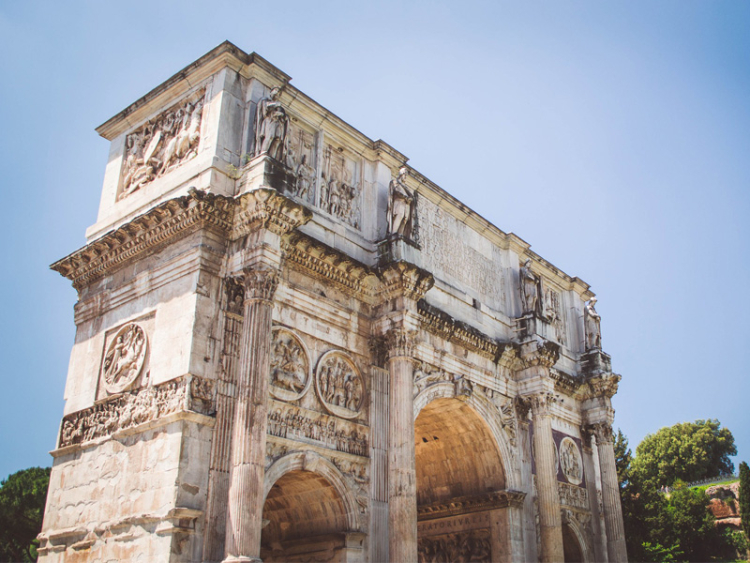
First, we visit the Colosseum, the iconic building which was the largest amphitheatre which had ever been built at the time of its construction, holding 50 to 80 thousand spectators at a time. Next, we see where the gladiators lived and trained at the Ludus Magnus, before venturing under the church of San Clemente to explore the imperial mint and a subterranean temple of the eastern god Mithras. We finish the day at the Arch of Constantine, a triumphal arch which was built on behalf of the Roman Senate to celebrate Emperor Constantine's defeat of the Roman tyrant Maxentius. (B,D)
Day 4 - Hadrian's Villa - Tivoli
Day 4 - Hadrian's Villa - Tivoli
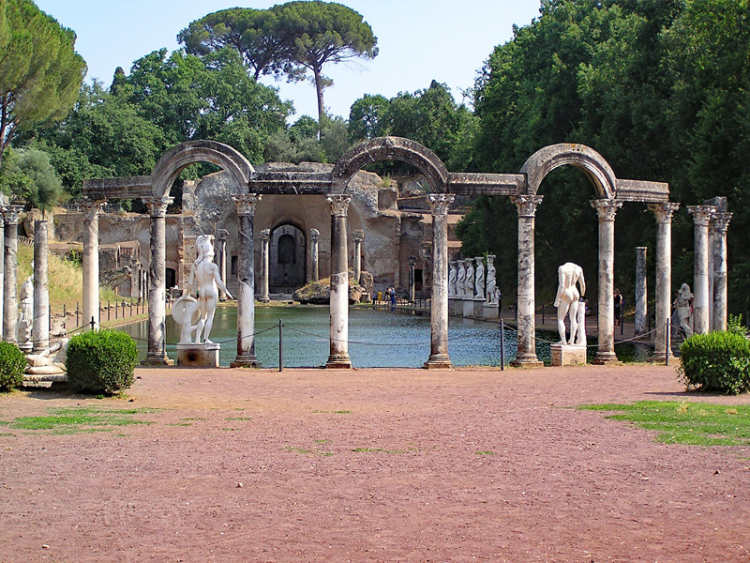
We spend the day at Hadrian's Villa, one of the most extraordinary Roman archaeological sites in Italy. The emperor Hadrian (117 - 138 CE) was both a great traveller and an architect. At Tivoli (then Tibur) he constructed a series of pavilions, baths and temples recreating many of the places he had visited throughout his empire. Originally designed as a seasonal refuge from the heat of summer in Rome, Hadrian permanently retired to Tivoli after an illness, and in his later years ran the empire from his villa. (B,D)
Day 5 - Altar of Peace, the Pantheon and Column of Marcus Aurelius
Day 5 - Altar of Peace, the Pantheon and Column of Marcus Aurelius
Visit the museum and examine the wonderful relief sculptures of the Ara Pacis, the Altar dedicated to the Roman goddess of Peace. Nearby, and if open, we explore the vaulted cells of the recently restored Mausoleum of Augustus, the huge circular sepulchre that the emperor built for himself and his family. A new multi-media experience will allow us to appreciate the full grandeur of a monument that left nobody in doubt who controlled the destiny of Rome*. We finish the day at the Pantheon, one of the most beautiful and best-preserved Ancient Roman temples due to its continuous use as a place of worship. Our final visit of the day is the remarkable Victory Column of Marcus Aurelius. Dinner is not included this evening and you are free to find your own restaurant. There is also the option to dine with your tour manager and historian at your own expense. (B)
Day 6 - Trajan’s Market, the Imperial Fora and Trajan’s Column
Day 6 - Trajan’s Market, the Imperial Fora and Trajan’s Column
Today we explore the archaeological complex of Trajan’s Market, built between AD 107 and 110. As we wander through its streets, shopfronts and buildings, we gain an insight into the daily lives of ordinary Roman citizens. We then visit the Imperial Fora, a series of public squares constructed between 46 BC and AD 113 that formed important centres of political and public life. Finally, we admire the imposing Trajan’s Column, with its intricate reliefs depicting the emperor’s Dacian campaigns. (B, D)
Please note: the Mausoleum of Augustus is currently closed. We will include it in the itinerary if it reopens in time for our visit.
Day 7 - Ostia and depart
Day 7 - Ostia and depart
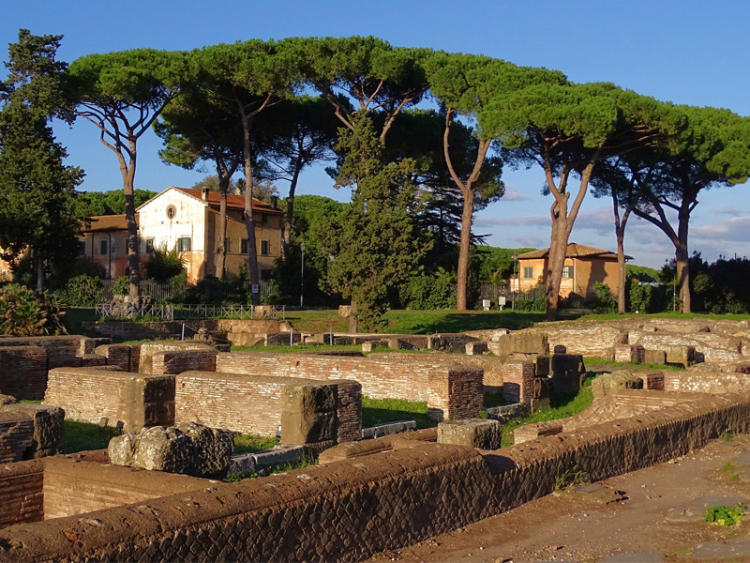
We spend the morning at the archaeological site of Ostia Antica, the ancient port of Rome. The remains of many of the ancient city’s buildings are wonderfully preserved, allowing us to walk in the footsteps of the ancient inhabitants through inns, taverns, shops, a theatre and many houses. Depart for Rome Fiumicino airport for the return flight to London unless you have made your own travel arrangements. (B)
Recommended Reading List
- Rome and Environs: An Archaeological Guide published by University of California Press (2014)
- Rome: A Living Portrait of an Ancient City published by The Johns Hopkins University Press (2010)
- Rome: An Oxford Archaeological Guide published by Oxford University Press (2010)
- SPQR: A History of Ancient Rome published by Profile Books Ltd (2015)
- The Last Hour published by Zaffre Publishing (2018)