
Echoes of Empire
Exploring Tunisia's Classical Civilisations
Tour Introduction
This is a superb tour for those who want to explore the remarkable legacies of Tunisia’s rich Classical past. We visit a wide range of sites which powerfully convey the history and culture of the intricate civilisations that have populated this lovely semi-desert country.
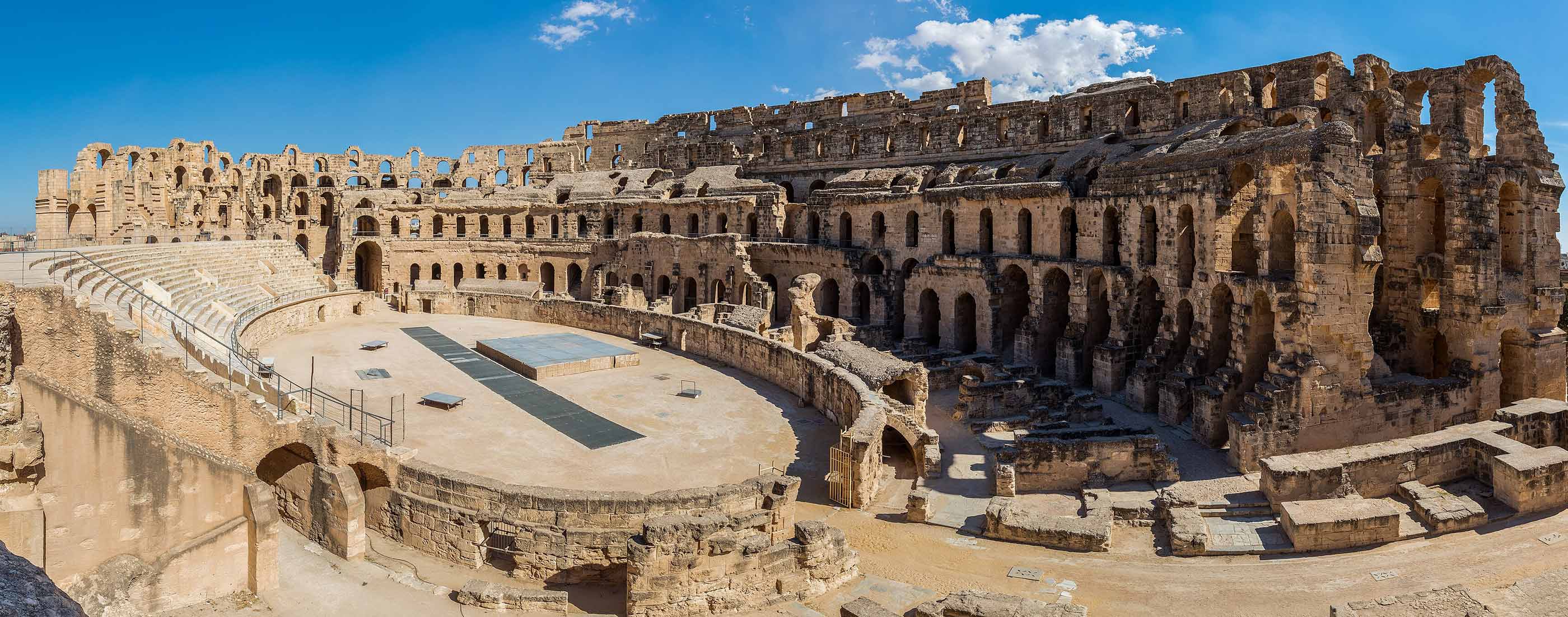
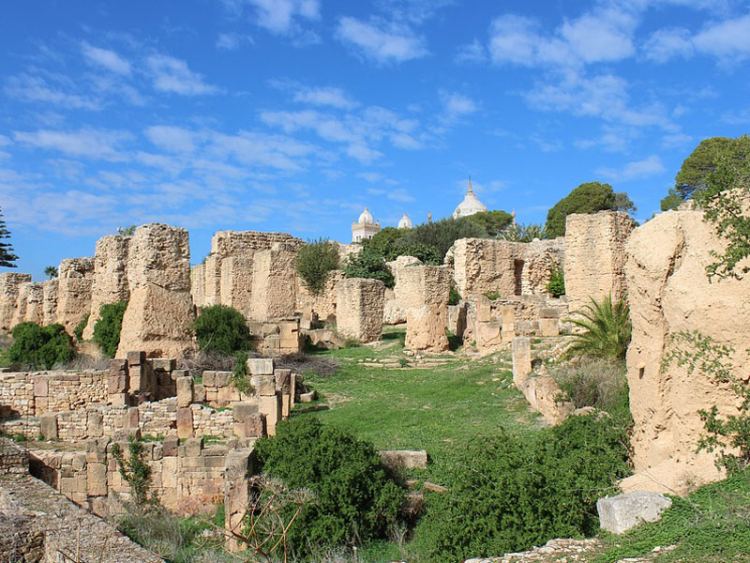
At Carthage we ponder the trading settlement established by Phoenicians traders, becoming a successful trading entrepot, but so decisively destroyed by the Roman military machine in 146 BC. At El Jem we marvel at Africa’s most splendid Roman amphitheatre and get a real feel for what Roman entertainment in this far-flung part of her empire must have been like.
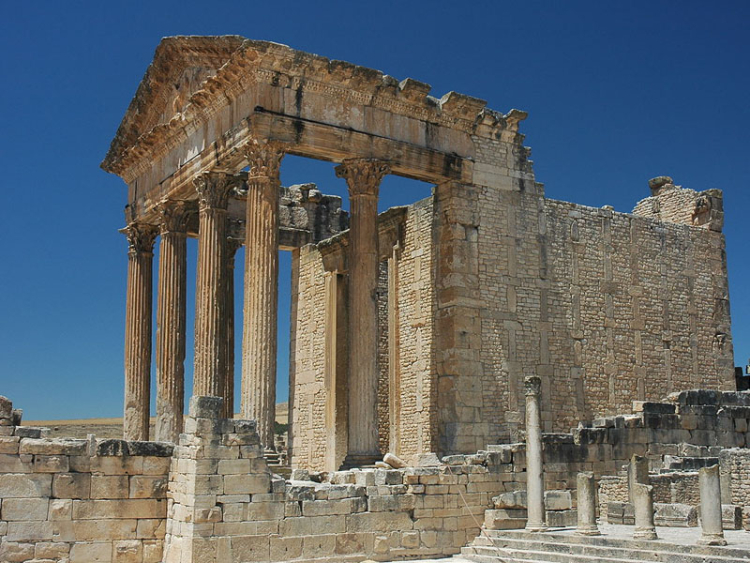
And at impressive Dougga we wander amongst the columns and pediments of this huge town, set in a spectacular landscape, and muse on Roman frontier life in this prosperous city. The tour is complemented but visits to excellent archaeological museums, including the world-renowned Bardo, where we get glimpses of everyday life through the elaborate mosaics uncovered at the sites we have visited.
This is a tour not to be missed as we visit some of the most stunning and awe-inspiring archaeological sites in North Africa.
Highlights
• Travel in the company of an expert archaeologist and North Africa specialist
• Visit spectacular Classical sites at El Jem, Dougga, Kerkouane, Thurbabo Majis and Uthina
• Capture the poigniant atmosphere of Carthage, its rich history and ultimate destruction
• Enjoy Tunisia’s excellent museums including the Bardo, Sousse Archaelogical Museum and Museum of Islamic Art in Kairouan
• Soak up the stunning coastal landscapes of the Cap Bon Peninsula and its fascinating Classical sites
Tour Details
Expert Guides
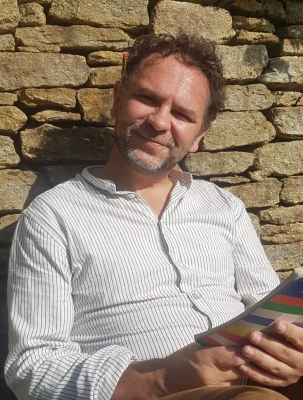
Dr Farès K Moussa
Farès is an anthropologist, archaeologist and consultant in heritage and arts/culture management, with a particular expertise in North African, Saharan and central Mediterranean Phoenicio-Punic, Amazigh (‘Berber’), Nuraghic (Sardinia) and Roman archaeology, as well as contemporary ‘folk’ Islamic practices. His portfolio career over the last twenty-five years has included numerous archaeological survey, excavation and heritage impact mitigation projects in the MENA region and Europe; and Directorships in several arts/culture organisations in the UK. He has been leading and lecturing on archaeological tours since 2006.
Farès read Anthropology and Psychology at the University of East London, Archaeology at University College London and University of Edinburgh; and was Marie Curie Fellow in the History of Thought at the École normale supérieure (Paris). He is particularly interested in the relationships people develop with material and visual culture, especially in ‘religious’ contexts; and how different human perceptions and understanding of the world are determined. He has several journal and chapter publications and is currently writing his first book based on his thesis (University of Southampton) about how human cognition underlies different types of relationship to material culture.
Background
Caught between the clashing influences of Africa and Europe, Tunisia has been a meeting point of cultures throughout history, with a geography as varied as its culture. From the Numidian tribes in 3000 BC to the Tunisian Revolution in December 2010, sparking the so called ‘Arab Spring’, Tunisia is a treasure trove of ruins, ancient cities, architecture and artefacts.
The country has seen times of extreme prosperity and decline under Phoenician and Roman rule, and the Arab Muslim Conquest, changing the language, customs and architectural landscape of the country from towering, clean cut pillars to the beautiful and imposing domed grand mosques found in every city.
The strategic location of Tunisia has been exploited for centuries and this encouraged acute rivalry between the ancient world’s most powerful peoples – Greeks, Phoenicians and Romans.
What's Included
- Best available accommodation
- Return flights from London (optional)
- Entrance fees for sites included in itinerary
- Dedicated Tour Manager
- Expert historians throughout providing a daily variety of talks, presentations and Q&A
- The company of like-minded travelers
- Dinner parties hosted by your expert historians and tour manager
- Meals as indicated in the itinerary
- Two drinks i,e wine or beer at each dinner and a welcome drink on first evening
- Helpful and friendly travel advice
- Tour information booklet
- Modern, comfortable, air-conditioned coach
Itinerary
Day 1. Arrival
Day 1. Arrival
Fly from London to Tunis Carthage International Airport and transfer to our hotel. Welcome drink and introductory talk. Hotel in the Tunis area for three nights. (D).
Day 2. Carthage
Day 2. Carthage
Spend the morning immersed in the dramatic history of Carthage, once a city of immense power and splendour. In the afternoon return to Tunis to visit the superb Bardo Museum, home to an outstanding collection of Punic, Hellenistic, Roman and Christian treasures and the largest collection of mosaics in the world. (B,L,D).
Day 3. Utica
Day 3. Utica
This morning take a short trip to atmospheric Utica, an ancient Punic city that became the first capital of the Roman province of Africa and a powerful centre in its own right. Its wealth is reflected in the grand houses of its patricians, including the remarkable House of the Cascades. Return to Tunis for lunch and spend the afternoon exploring the city’s finest sites on a walking tour of the centre. (B,L,D).
Day 4. Cape Bon
Day 4. Cape Bon
Enjoy a relaxing day on the magnificent Cape Bon peninsula. Drive first to Kerkouane, an important Punic city destroyed during the First Punic War from 264 to 241 BC. Set above the churning Mediterranean, it offers superb coastal views as we continue to Nabeul, famed in Roman times for producing garum. Continue to Sousse, our base for the next three nights. (B,L,D).
Day 5. Kairouan
Day 5. Kairouan
Visit the excellent Museum of Islamic Art in Kairouan and explore the treasures that reflect one of the most significant cultural transformations in Tunisia’s history. In the afternoon wander the whitewashed streets of this ancient holy Muslim capital, a UNESCO World Heritage Site, and see the revered Great Mosque with the oldest minaret in the Muslim west. (B,L,D).
Day 6. Sousse and EL Jem
Day 6. Sousse and EL Jem
Drive to the colossal Amphitheatre of El Jem, among Tunisia’s most impressive Roman monuments and a powerful reminder of ancient spectacle. After lunch visit the Sousse Archaeological Museum, rich in vibrant mosaics and artefacts that illuminate life in classical times, then enjoy a walking tour of the ninth century Sousse Medina, an outstanding example of Aghlabid military architecture. (B,L,D).
Day 7. Dougga
Day 7. Dougga
Travel through beautiful countryside to the breathtaking ruins of Dougga, one of the best preserved and most enthralling Roman sites in Africa. This UNESCO World Heritage Site stands proudly on a hillside with sweeping views, inviting exploration of its baths, villas and theatres. Wander its remarkable network of ancient streets and alleyways. Hotel in Dougga for one night. (B,L,D).
Day 8. Thurbabo Majis, Uthina and depart
Day 8. Thurbabo Majis, Uthina and depart
Drive back to Tunis through the striking scenery of central Tunisia. Stop at Thurbabo Majis, originally a Punic settlement that prospered under Roman rule by taxing trade between plain and sea. Visit the well preserved Forum and civic and religious buildings, dominated by six fine fluted Corinthian columns. Continue to Uthina, whose mosaics are displayed in the Bardo Museum, and explore its theatre and impressive cisterns. (B,L,D).
Day 9: Home.
Day 9: Home.
Transfer to Tunis Carthage International Airport for the flight back to London (or you may want to extend your stay in Tunisia). (B).
Recommended Reading List
- Enemy of Rome : The Epic Campaigns of Hannibal - Immortal Conqueror and Military Genius published by Pan Books (1960)
- Orientalism published by Penguin Books (1978)
- Roman Art and Architecture published by Thames and Hudson Ltd (1964)
- Rome in Africa published by Routledge (1993)
- Rome: Empire of the Eagles, 753 BC - AD 476 published by Routledge (2009)
- The Desert War: The classic trilogy on the North African campaign 1940-1943 published by Aurum Press Ltd (2017)
- The Histories published by OUP Oxford (2010)