
Liberation! From Normandy to the Rhine
With America’s GIs across Europe
Tour Introduction
During this 9-night, 10-day tour we follow American forces from the beaches of Normandy through northern France, Belgium, Luxembourg and Germany as they fight alongside their allies to liberate western Europe from Nazi rule.
This is a tour that has been carefully crafted to include the most important US sites in this bitter but bravely fought campaign: battlefields, fortifications, military cemeteries, memorials, liberated towns and some of Europe’s best military history museums, all of which illuminate the American story.
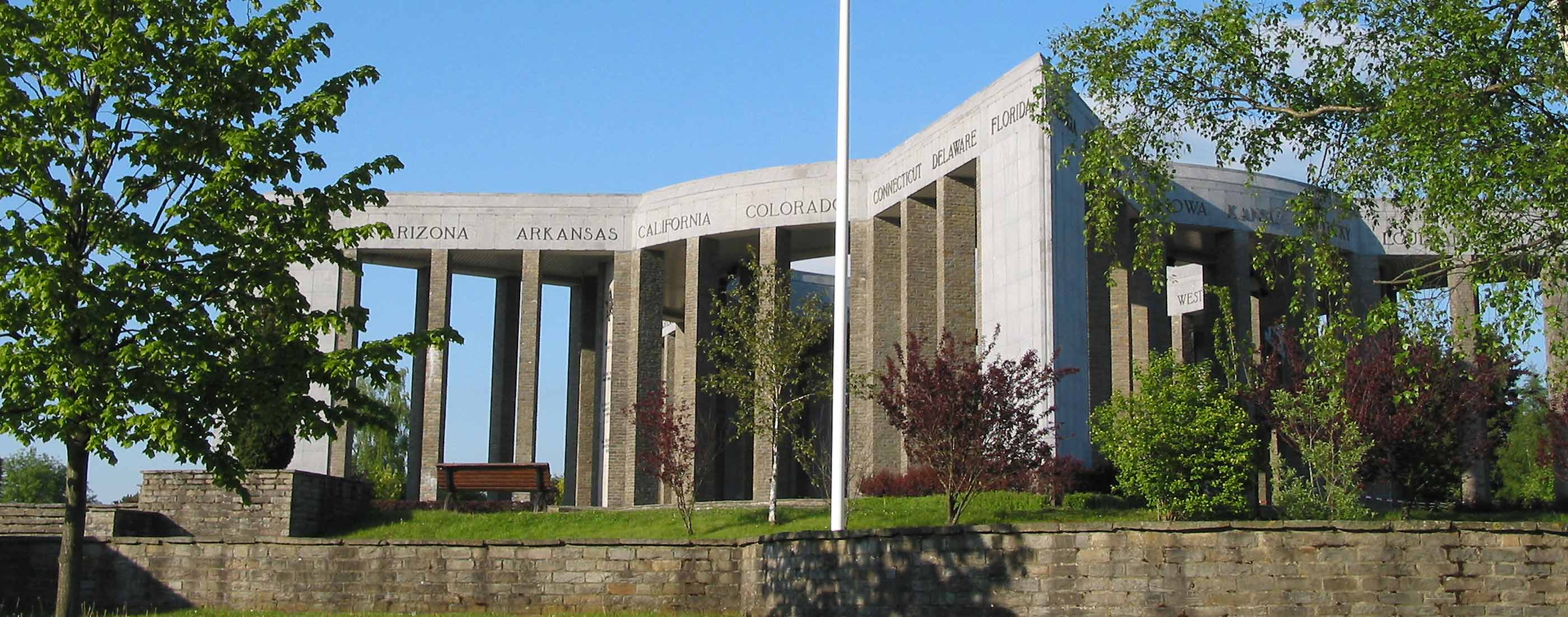
We begin on the beaches of Normandy where American forces fought their way ashore before helping to close the Falaise Pocket. We then follow the story through the Armistice site at Compiègne, the American cemetery at Henri-Chapelle, Aachen and the Hürtgen Forest, before exploring the Battle of the Bulge from Malmedy and La Gleize to Bastogne and Luxembourg.
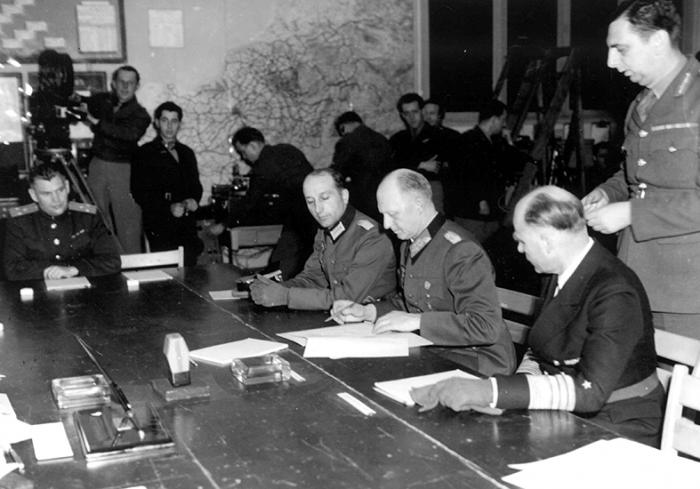
At Remagen we stand at the exact point where the Americans crossed the Rhine and we conclude at Reims where the German surrender was signed in Eisenhower’s headquarters.
Highlights
• Visit the landing beaches of Omaha and Utah and the remarkable involvement of US forces in Operation Overlord
• Explore the dramatic events of the Falaise Pocket
• Visit the sites of the bitterly fought battles of the Bulge and Hürtgenwald Forest
• Spend a full day exploring the American involvement in the battle for Luxembourg
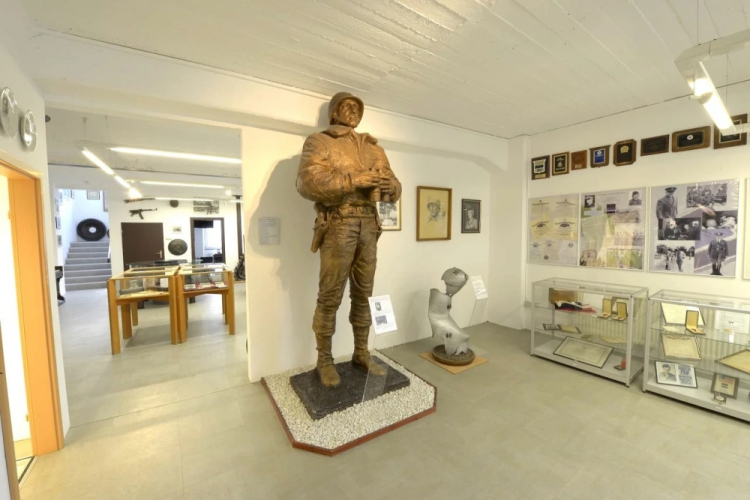
• Visit the General Patton Museum in Luxembourg
• Visit Remagen Bridge and understand Allied crossing of the Rhine
Tour Details
Interested in this tour but not ready to book? Register your interest using the link below and we will keep you updated on the progress of the tour.
Expert Guides

Kyle Sinisi
Kyle S. Sinisi graduated from the Virginia Military Institute in 1984 with a BA in History. Following four years of active-duty service in the United States Army, he attended Kansas State University, where he earned both the MA and Ph.D. Kyle has served as a professor at The Citadel (The Military College of South Carolina) since 1994.
At The Citadel, Kyle concentrates his course offerings on the Civil War, World War II, U.S. military history, and the history of weaponry. He is a two-time recipient of the James A. Grimsley Award, The Citadel’s annual award for excellence in undergraduate teaching.
Kyle is co-editor (with Professor Michael B. Barrett) of the “War and Society” line of books for Bloomsbury Publishing. He is the author of The Last Hurrah: Sterling Price’s Missouri Expedition of 1864 (A.M. Pate Award for best book of 2015 on the Trans-Mississippi Civil War) and Sacred Debts: State Civil War Claims and American Federalism. He is also a co-editor of Warm Ashes: Issues in Southern History at the Dawn of the Twenty-First Century. Kyle can be seen in programs on the Discovery Channel, the Smithsonian Channel, and South Carolina Educational Television.
Background
The Normandy landings of 6 June 1944 were the much-anticipated hammer blow against Nazi Europe that the Allies hoped would bring the war to a decisive end. The foothold gained by the 160,000 troops transported across the English Channel on day 1 soon expanded forcing German forces into gradual retreat and by the end of August over 2 million Allied soldiers were in France.
The role of US forces in the invasion was decisive.
At Omaha beach the 1st US Infantry Division fought determinedly against a strong defensive position and at Utah beach the U.S. VII Corps eventually managed to dominate the strategically important Cotentin Peninsula. By August Allied forces were breaking out of the Normandy beachheads forcing the Germans into retreat and encircling 50,000 of their troops in the so-called Falaise pocket. On 1st August the Twelfth United States Army Group was formed which with 1.3 million troops became the main spearhead for the Allied advance across central France into the rapidly weakening Reich.
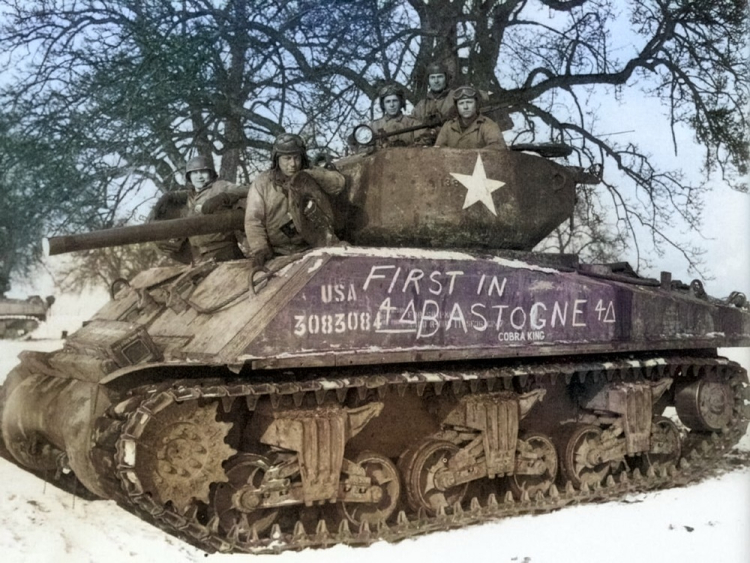
By the Autumn of 1944 the Allies had stalled at the formidable Siegfried Line (Westwall) and American forces began a bloody battle in the Hurtgen Forest in a bid to breach it. On 16th December German Army Group B launched the surprise Ardennes Offensive, Hitler’s last gamble to defeat the Allies and negotiate a peace in Germany’s favour. German forces pushed through the relatively inexperienced American units creating the ‘bulge’ that gave the famous battle its name. By the end of the month the advance ground to a halt in the face of the spirited American defence of the towns of Bastogne and St Vith and changing weather conditions. Winston Churchill called the Battle of the Bulge 'undoubtedly the greatest American battle of the war'.
By early 1945 German forces were in disarray and the end of the Reich in sight. On 7th March the US First Army crossed the Rhine at Remagen establishing a solid bridgehead on the other side. The Twelfth Army expanded its operations trapping 300,000 troops from German Army Group B in the Ruhr pocket. By April the Americans had reached the Elbe and on 25 April a Lieutenant of the U.S. 69th Infantry Division crossed the river near Torgau to meet with a unit of the Soviet 58th Guards Rifle Division. With this meeting the German Reich had been severed in two and the war in Europe was soon to reach its end
"You are about to embark upon the Great Crusade, toward which we have striven these many months. The eyes of the world are upon you"
General Dwight D. Eisenhower, Letter to Allied Forces, 1944
What's Included
- 3 & 4 Star Hotels
- Return flights from London (optional)
- Entrance fees for sites included in itinerary
- Dedicated Tour Manager
- Expert historians throughout providing a daily variety of talks, presentations and Q&A
- The company of like-minded travelers
- Meals as indicated in the itinerary
- Two drinks i,e wine or beer at each dinner and a welcome drink on first evening
- Tour information booklet
- Modern, comfortable, air-conditioned coach
Itinerary
Day 1: Assemble
Day 1: Assemble
Fly from London to Paris Charles de Gaulle airport where the group assembles. Meet coach and drive to Normandy for our exploration of the Operation Overlord sites. Continue to our hotel in the Bayeux area for three nights. Welcome drinks and introductory talk before dinner. (D).
Day 2: Omaha, Pointe du Hoc and St Laurent.
Day 2: Omaha, Pointe du Hoc and St Laurent.
Our tour starts with the outstanding American involvement in the dramatic events of 6 June 1944 at Omaha Beach. To put the day in context we start by visiting the excellent Overlord Museum at Colleville-sur-Mer which illuminates the events through a combination of exhibits, dioramas and immersive displays. We then move to the beach itself where we study the bloody battle to establish a beachhead there on the morning of the 6th. We will also visit the remarkable German battery at Pointe du Hoc, an area preserved largely as it was in 1944. We end the day at the poignant site of the American National Cemetery and memorial at St Laurent. (B, D).
Day 3: Ste-Mere-Eglise & Utah.
Day 3: Ste-Mere-Eglise & Utah.
Today we travel to the historic town of Ste-Mere-Eglise where US airborne troops landed in the early hours of 6 June in what were the first Allied actions of Operation Overlord. Here we visit the Airborne Museum where we get a superb insight into the strategic importance of the Cotentin Peninsula and the highly risky nature of airborne warfare. We then move on to the La Fiere causeway, scene of a desperate four-day struggle to establish control over a critical crossing of the River Merderet. Our tour continues to Utah Beach where the US VII Corps fought to establish a beachhead before advancing inland. On our journey back to Bayeux we stop at the German war cemetery at La Cambe where over 12,000 German soldiers are buried. (B, D).
Day 4: The Falaise Pocket and Compiègne.
Day 4: The Falaise Pocket and Compiègne.
We leave the Normandy coast to travel inland to the town of Falaise to explore the dramatic events of August 1944 when large numbers of German troops from Army Group B were trapped by Allied armies. The 90th American Infantry Division played a key role in this action. We visit the Moissy Ford, known as the ‘corridor of death’, where thousands of Germans tried to escape, and the Memorial Museum Montormel, on the very spot where the pocket was closed. Continuing east, we visit the Armistice site at Compiègne where Hitler staged the French surrender of June 1940 in the same railway clearing used for the German armistice of 1918. Hotel in the Compiègne area – 1 night. (B, D).
Day 5: Henri-Chapelle and Aachen.
Day 5: Henri-Chapelle and Aachen.
We continue eastwards into Belgium to visit the Henri-Chapelle American Cemetery, the burial place of more than 8,000 American servicemen killed in north-west Europe. From here we travel to Aachen where we embark on a guided walk of the city and learn about one of the toughest urban battles fought by the US Army in 1944. The capture of Aachen made it the first German city on German soil to fall to the Allies. Hotel in Aachen – 2 nights. (B, D).
Day 6: The Westwall, Hürtgenwald and Remagen
Day 6: The Westwall, Hürtgenwald and Remagen
Today we follow the line of the formidable German defensive Siegfried Line, including surviving anti-tank obstacles, before continuing to the Hürtgenwald Museum where we gain an appreciation of the challenges faced by the US First Army in one of the longest and most costly battles in its history. We then visit the nearby Vossenack German cemetery before driving on to Remagen and the Peace Museum on the site of the Ludendorff Bridge, captured intact by American forces on 7 March 1945. Return to Aachen. (B, D).
Day 7: Peiper’s Trail and St Vith
Day 7: Peiper’s Trail and St Vith
Leaving Aachen we cross into Belgium and begin exploring the northern sector of the Battle of the Bulge. We visit the Malmedy Massacre site at Baugnez before following the route of Kampfgruppe Peiper through Stavelot and Trois-Ponts to La Gleize, where the German advance finally stalled. We then continue to St Vith, whose stubborn American defence badly disrupted the German timetable, before travelling on to Bastogne for our three-night stay. (B, D).
Day 8: Bastogne and the southern Bulge
Day 8: Bastogne and the southern Bulge
A full day examining the battle around Bastogne. We begin at the remarkable Bastogne War Museum before touring the nearby battlefield sites north of the town, which may include Bois Jacques, the Recogne-Bastogne German Military Cemetery and Foy. Return to Bastogne. (B, D).
Day 9: The Battle of the Bulge in Luxembourg
Day 9: The Battle of the Bulge in Luxembourg
We travel into Luxembourg to visit Schumannseck, scene of intense fighting in the winter of 1944–45, and the ‘martyr city’ of Wiltz. Continuing to Ettelbruck we visit the General Patton Memorial Museum and the nearby Patton Monument and Sherman tank before ending at the National Museum of Military History at Diekirch. Return to Bastogne. (B, D).
Day 10: Reims and departure
Day 10: Reims and departure
We leave Bastogne and return to France, stopping at the Surrender Museum in Reims where the German High Command signed the act of unconditional surrender in Eisenhower’s headquarters on 7 May 1945. After lunch in Reims we continue to Paris Charles de Gaulle airport for return flights. (B).